Indonesia legal aid network warns of democratic erosion in 2025 review
Indonesia’s Legal Aid Foundation warns that democracy, human rights, and the rule of law are deteriorating, citing shrinking civic space, military expansion into civilian life, and unresolved historical abuses in its 2025 Year-End Review.
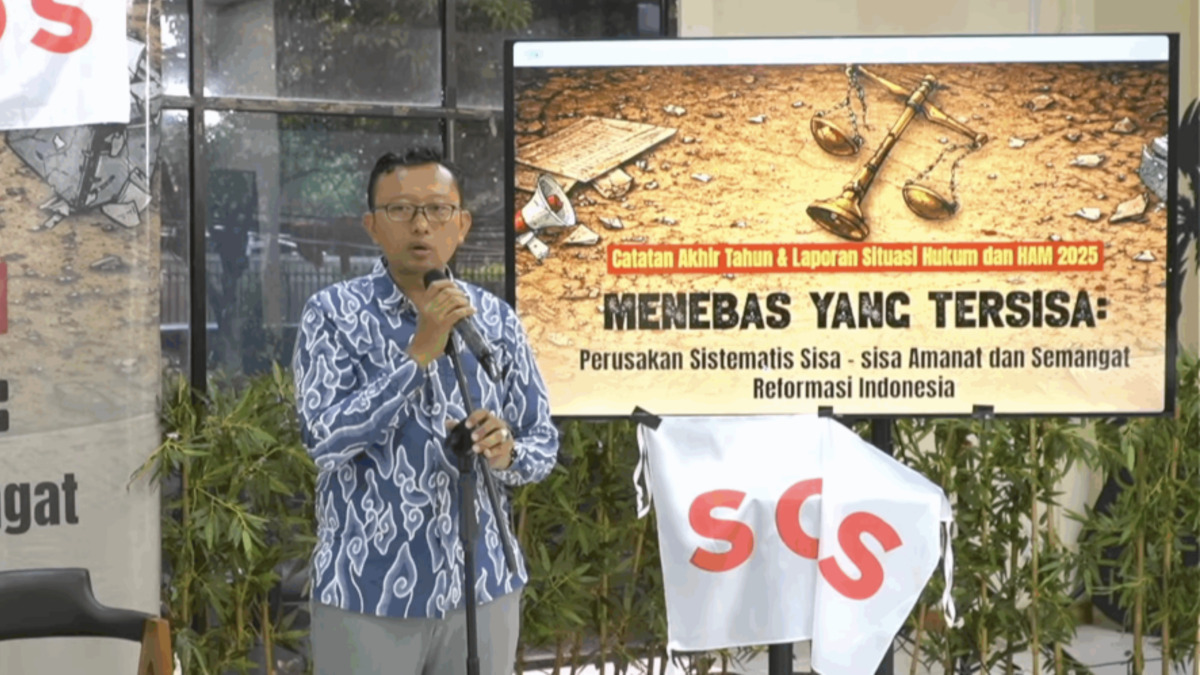
- Indonesia’s oldest legal aid network reports a systematic decline in democracy, human rights, and the rule of law.
- The review documents shrinking civic space, rising military involvement in civilian affairs, and intensifying land conflicts.
- Despite pressures and budget cuts, legal aid groups and grassroots movements continue to resist rights abuses.
Indonesia’s oldest legal aid network has issued a stark warning that the country is experiencing a systematic erosion of democratic norms, human rights protections and the rule of law, according to its newly released 2025 Year-End Review.
The report, launched on Tuesday by the Indonesia Legal Aid Foundation (YLBHI), draws on case data from 16 Legal Aid Institute (LBH) offices and two project-based units operating across 18 provinces.
Over the past year, YLBHI and its affiliates handled 3,035 cases, reaching more than 131,000 people.
Of these, 508 involved direct legal advocacy, while the remainder were addressed through legal consultations.
The review identifies widespread violations across three key rights sectors: civil and political rights, economic, social and cultural rights, and protections for vulnerable groups.
Cases ranged from threats to personal security and integrity, to land and property disputes, and barriers to accessing legal aid.
“These are not just numbers. They are people’s lives, their futures,” said legal aid beneficiary Jorgiana Augustine during the launch.
“Freedom and independence have been built on sweat, blood, even lives—along with the unseen work of legal aid workers and solidarity networks.”
A mirror of Indonesia’s political direction
YLBHI chair Muhamad Isnur described the report as “a mirror of the face of this republic”, arguing that the decline of democracy, the rule of law and human rights has become increasingly visible under the current administration of Prabowo Subianto and Vice President Gibran Rakabuming Raka.
According to the report, civic space in Indonesia has continued to shrink, marked by attacks on activists and human rights defenders, the silencing of journalists and artists, and the marginalisation of public participation in lawmaking.
YLBHI also documented mass arrests and violence against protesters, often accompanied by threats of prosecution and criminalisation.
As civilian freedoms narrow, the organisation warns of what it calls a “military pandemic”: the growing involvement of the Indonesian National Armed Forces (TNI) in civilian governance.
The review points to revisions of the TNI Law that have effectively revived the military’s dual function, enabling its deeper role in politics, state-owned enterprises and large-scale development projects.
TNI personnel, the report notes, have been placed in strategic civilian positions, including leadership roles in the state logistics agency Bulog and major state-linked companies.
Military involvement has also expanded into flagship programmes such as national strategic projects, food estates in Papua’s Merauke region, and the government’s free nutritious meals initiative.
Land conflicts and resource extraction
In the natural resources sector, YLBHI paints a picture of long-running agrarian conflicts exacerbated by state-backed development.
Over the past eight years, its offices have handled 106 agrarian disputes covering more than 843,000 hectares and affecting nearly 92,000 people. Forty of these cases involved criminalisation of community members.
Many conflicts were linked to national strategic projects and plantation development, where security forces were deployed to push through land acquisition.
The report cites intimidation against Indigenous communities in Merauke and violent incidents surrounding the Rempang Eco City project as emblematic of this trend.
Legal changes have also raised alarm. Amendments to the Mining Law, particularly Article 17A, are criticised for potentially legalising the eviction of settlements and farmland to serve mining interests, further weakening protections for rural and Indigenous communities.
Reckoning with the past—and the present
Beyond contemporary abuses, YLBHI warns of efforts to obscure unresolved historical crimes.
The review highlights official statements denying the May 1998 violence as a gross human rights violation and alleged pressure on National Commission on Human Rights (Komnas HAM) to avoid pursuing emblematic cases such as the killing of human rights defender Munir.
These moves, the organisation argues, run parallel to renewed public discourse about granting national hero status to former president Soeharto, despite legal rulings and parliamentary decrees that have held him responsible for unlawful acts and state losses during his three-decade rule.
Budgets and resistance
YLBHI also draws attention to what it describes as a deliberate weakening of oversight institutions through budget cuts.
Agencies such as Komnas HAM, the Witness and Victim Protection Agency and the Judicial Commission have faced reductions, even as funding for the military and police has continued to grow.
Yet the report does not end on a note of despair.
Amid what it calls a “chaotic humanitarian situation”, YLBHI highlights the resilience of grassroots movements and mutual aid initiatives—from neighbours supporting each other during disasters to collective acts of resistance and solidarity.
“No matter how far the state dismantles the principles of the rule of law, democracy and human rights,” the foundation concludes, “we, together with the people’s movement, will continue to stand firm—resisting and opposing arrogant power.”