
Indonesia disaster death toll rises to 1,140 as search efforts continue in Sumatra
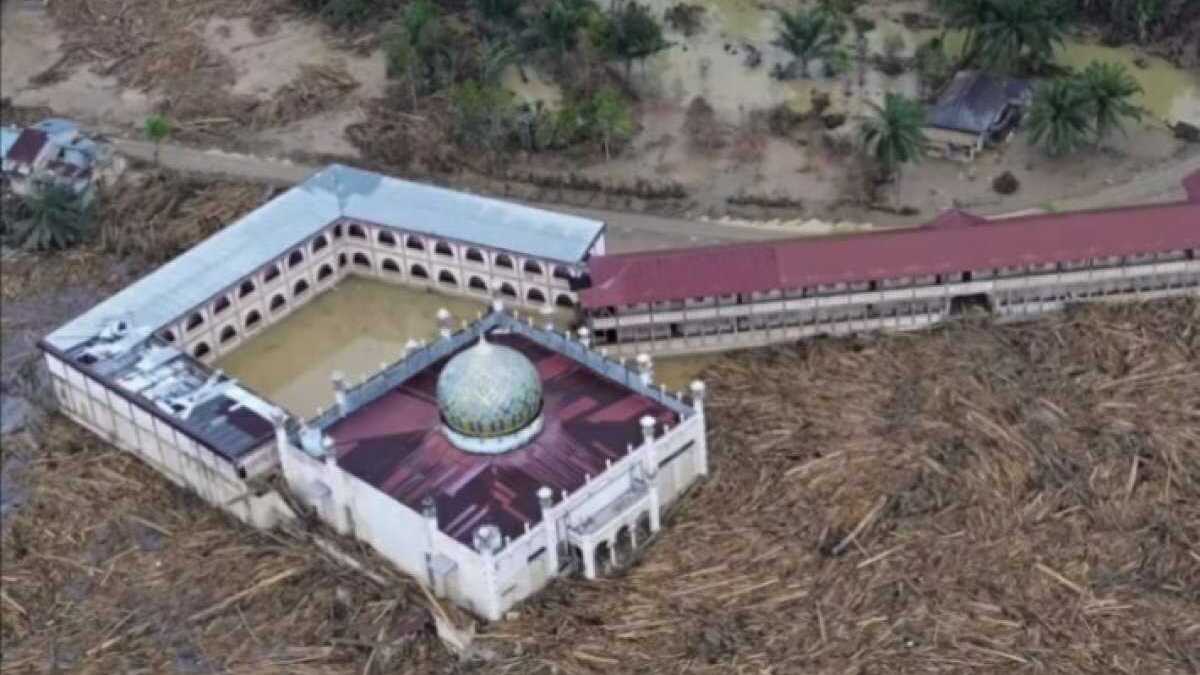
Indonesia’s disaster authorities say the death toll from floods and landslides in Sumatra has reached 1,140, with hundreds of thousands displaced and dozens still missing after weeks of heavy rain.
- Indonesia’s disaster agency says floods and landslides in Sumatra have killed at least 1,140 people across three provinces.
- More than 160 people remain missing, while nearly 400,000 residents are displaced.
- Authorities warn figures may still rise as rescue operations continue in difficult conditions.
Indonesia’s disaster authorities have confirmed that the death toll from a series of devastating floods and landslides in Sumatra has climbed to 1,140, underscoring the scale of one of the country’s worst humanitarian crises in recent years.
The update was released on Sunday, 28 December 2025, by the National Disaster Mitigation Agency (BNPB). According to BNPB, the casualties were recorded across three provinces — Aceh, North Sumatra, and West Sumatra — all of which were hit by prolonged heavy rainfall triggering flash floods and landslides.
“As of today, the total number of fatalities recorded across the three provinces stands at 1,140,” said Abdul Muhari, Head of BNPB’s Disaster Data, Information and Communication Centre.
Hundreds still missing
Despite weeks of emergency response operations, the number of people still unaccounted for remains high. BNPB reported that 163 individuals are officially listed as missing, with search and rescue teams continuing operations in difficult terrain.
“There are still 163 names listed as missing. Search operations are continuing so that we can reduce the number of missing persons as much as possible,” Abdul said, noting that unstable ground conditions and damaged access roads have complicated rescue efforts.
Widespread displacement
Beyond the death toll, the disaster has displaced hundreds of thousands of residents. BNPB data shows that 399,172 people remain displaced across the three provinces, many of them sheltering in temporary evacuation centres or with relatives.
The largest impact has been recorded in Aceh, where entire communities were swept away by flash floods and landslides in late November.
Provincial breakdown
According to BNPB’s latest figures as of 28 December 2025:
-
Aceh: 513 people confirmed dead, 31 still missing, and 377,853 displaced.
-
North Sumatra: 365 people confirmed dead, 60 still missing, and 11,384 displaced.
-
West Sumatra: 262 people confirmed dead, 72 still missing, and 9,935 displaced.
Authorities say the figures may still change as search operations continue and data from remote areas is verified.
Ongoing emergency response
BNPB has coordinated with local governments, the military, police and volunteer organisations to deliver emergency aid, including food, clean water, medical services and temporary shelter. However, officials have acknowledged that the sheer scale of displacement, combined with damaged infrastructure, has strained response capacities.
Indonesia is highly vulnerable to hydrometeorological disasters, particularly during the rainy season. Environmental groups and disaster experts have repeatedly warned that deforestation, land-use change and climate-driven extreme weather are intensifying the impact of floods and landslides across the archipelago.
As recovery efforts continue, BNPB has urged residents in disaster-prone areas to remain alert to further heavy rainfall, while stressing that the priority remains locating the missing and ensuring the safety and basic needs of displaced communities.
Emergency Extended as Flood Crisis Continues to Grip Aceh
Aceh Governor Muzakir Manaf has extended the province’s hydrometeorological disaster emergency response by a further 14 days, acknowledging that large parts of Aceh remain paralysed weeks after devastating floods and landslides struck in November.
The emergency status, originally due to expire on 25 December, will now remain in force until 8 January 2026, marking the second extension since the disaster began. In a video statement posted on Friday, Manaf—widely known as Mualem—said the decision followed updated field assessments and formal requests from regencies and municipalities still struggling with disrupted services and slow recovery.
The extension was coordinated with the central government during an emergency management meeting involving senior officials and the National Disaster Mitigation Agency (BNPB).
Provincial authorities have been instructed to intensify emergency response rather than transition prematurely to recovery, prioritising the delivery of aid to isolated communities, the restoration of health services, and the gradual reopening of schools.
Hospitals and community health centres have been ordered to resume operations, mobile clinics deployed to hard-to-reach areas, and agencies tasked with repairing damaged roads, bridges, irrigation systems and flood-hit farmland to stabilise livelihoods.
Despite these measures, humanitarian groups warn that conditions on the ground remain severe.
Civil society organisations have criticised what they describe as bureaucratic delays and slow budget mobilisation during the critical early phase of the disaster, while residents in some districts have raised white flags of distress to signal desperation over prolonged flooding and shortages of clean water, fuel and electricity.
Experts caution that the scale of flooding across Aceh and neighbouring provinces represents one of the most far-reaching disasters in the region in decades, with prolonged isolation posing risks of food insecurity, malnutrition and long-term economic damage if large-scale, coordinated action does not accelerate in the coming weeks.