Indonesian police criticised after company security allegedly shot farmers & victims were later named suspects
The shooting of five farmers in South Bengkulu has reignited debate over armed security in agrarian conflicts, after police named victims as suspects and drew condemnation from human rights groups.
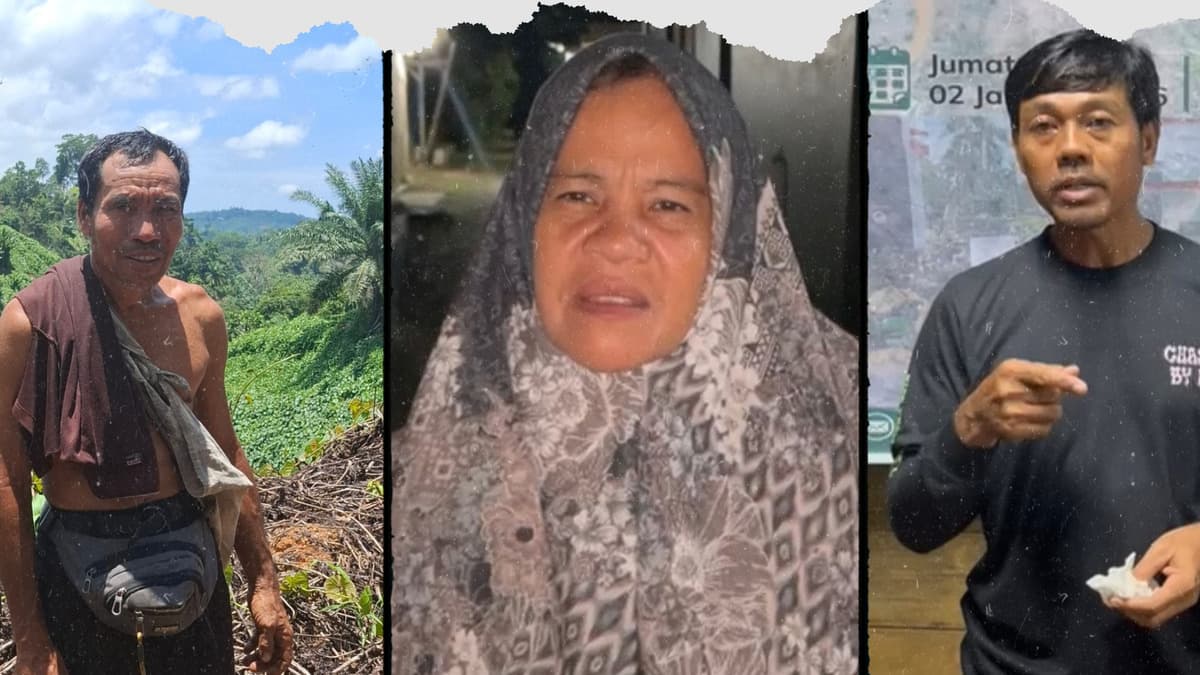
- Five farmers were shot during a land dispute in South Bengkulu, allegedly by company security personnel.
- WALHI accuses police of criminalising victims by naming three farmers, including two shooting victims, as suspects.
- Rights groups are calling for investigations, case termination, and stronger victim protection mechanisms.
The shooting of five farmers in Pino Raya village, South Bengkulu Regency, has drawn renewed scrutiny over the use of armed security in agrarian conflicts and the conduct of law enforcement, after environmental group Wahana Lingkungan Hidup Indonesia (WALHI) accused police of criminalising the victims instead of pursuing the alleged perpetrators.
The incident occurred on Monday, 24 November 2025, amid a long-running land dispute between local farmers and PT Agro Bengkulu Selatan (PT ABS).
According to the National Commission on Human Rights of the Republic of Indonesia (Komnas HAM), five farmers were shot by security personnel allegedly employed by the company.
Chronology of the shooting
In a formal press statement issued on 25 November 2025, Komnas HAM said it had received preliminary information indicating that the violence was part of an escalating agrarian conflict.
Farmers reportedly discovered company-owned heavy machinery destroying their crops at around 10.00 am local time.
A confrontation ensued at approximately 10.45 am and continued for nearly two hours.
At around 12.45 pm, one member of the company’s security team allegedly fired a gun at the farmers, striking one man—identified by Komnas HAM as Mr B—in the chest.
The same individual is said to have then fired indiscriminately at residents, injuring four others: Mr L (gunshot wound to the knee), Mr EH (thigh), Mr S (lower ribs/underarm), and another Mr S (calf).
Residents reportedly managed to apprehend the alleged shooter, while the injured farmers were rushed to medical facilities for treatment.
Komnas HAM described the shooting as a serious violation of the right to life, the right to personal security, and the right to protection from violence, as guaranteed under Indonesia’s Constitution, Law No. 39 of 1999 on Human Rights, and international human rights standards.
Calls for investigation and protection
Following the incident, Komnas HAM urged the Bengkulu Regional Police to conduct an immediate, thorough, and transparent investigation. This includes examining the legality of firearm ownership and use by PT ABS security personnel, and ensuring accountability through proper legal proceedings.
The commission also called on police to guarantee protection for the victims, their families, and other Pino Raya farmers against intimidation or further violence.
In parallel, Komnas HAM urged the Ministry of Agrarian Affairs and Spatial Planning/National Land Agency (ATR/BPN) to pursue a fair and transparent resolution of the underlying land dispute in line with human rights principles.
WALHI condemns ‘criminalisation’ of victims
More than two months after the shooting, WALHI Bengkulu issued a strongly worded press release on 28 January 2026, condemning the decision by the South Bengkulu District Police to name three farmers as criminal suspects—including two who were themselves shot, and one woman farmer.
The three are accused of violence and assault against PT ABS security personnel. WALHI said the move amounts to blatant criminalisation of victims and represents a serious violation of fair trial principles and victim protection.
“Instead of enforcing the law transparently and accountably against the perpetrators of the shooting, the police have turned the victims into suspects,” WALHI Bengkulu said, arguing that the decision demonstrates partiality and disregards the community’s sense of justice.
Questions over transparency and accountability
WALHI also criticised what it described as a lack of transparency in the handling of the case. According to the organisation, the five shooting victims have never received a clear explanation regarding the legal status of the alleged shooter. There are also suspicions that the suspect’s detention has been suspended.
Key information, WALHI said, has not been disclosed, including the legal basis for the use of firearms by company security, the results of ballistic tests, and details of firearm ownership. These elements, it argued, are crucial to uncovering the truth behind the shooting.
“This situation strengthens suspicions of efforts to protect the perpetrator, while reflecting the failure of law enforcement to guarantee justice, transparency, and human rights protection,” WALHI stated.
Self-defence and women defenders
WALHI Bengkulu stressed that the farmers’ actions do not meet the element of mens rea, or criminal intent. According to the group, the farmers were acting in self-defence to protect their land and livelihoods from a real and immediate threat.
Under Indonesian criminal law, WALHI argued, the incident should fall under the doctrine of lawful self-defence (noodweer), as provided for in the Criminal Code, and therefore should not be subject to criminal punishment.
The organisation also highlighted the criminalisation of a woman farmer as part of a broader pattern of intimidation against women environmental defenders. This, WALHI said, underscores the state’s failure to provide special protection for vulnerable groups, as required by law and human rights standards.
WALHI’s demands
WALHI Bengkulu called on the Chief of the Bengkulu Regional Police to immediately halt all legal proceedings against the three farmers. It also urged the South Bengkulu District Prosecutor’s Office to recommend discontinuing the case in the interests of justice.
In addition, WALHI demanded oversight by the National Police Commission, a human rights investigation by Komnas HAM, intervention by the National Commission on Violence against Women, and immediate protection and recovery measures from the Witness and Victim Protection Agency (LPSK).
“The termination of these legal proceedings is an urgent step to restore justice, end criminalisation, and ensure that the state protects farmers and women environmental defenders, rather than acting as an instrument of repression against them,” WALHI concluded.