KontraS-led coalition condemns alleged TNI land grabbing in East Java and South Sulawesi
A KontraS-led civil society coalition has condemned alleged land grabbing by the Indonesian military in East Java and South Sulawesi, warning that unilateral claims violate the rule of law and threaten citizens’ rights.
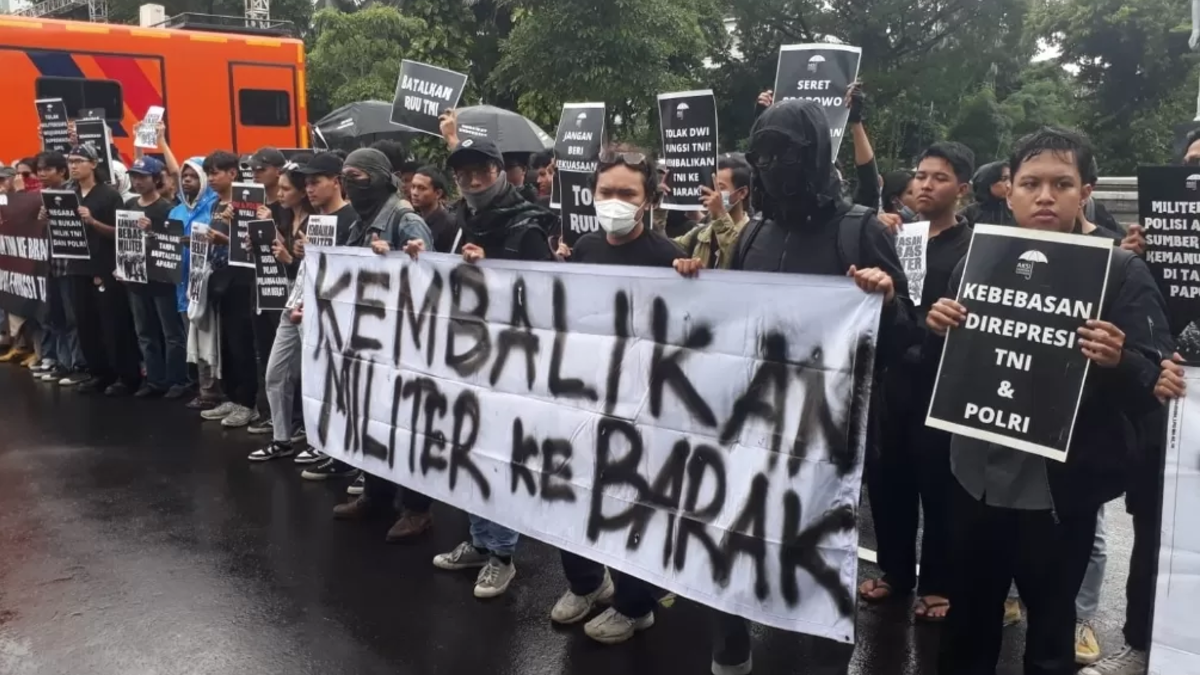
- A civil society coalition led by KontraS accused the Indonesian military of unilateral land grabbing in East Java and South Sulawesi.
- The coalition warned that forced land claims risk human rights violations and contradict the rule of law.
- It urged the TNI Commander and Defence Minister to halt land seizures and comply with judicial procedures.
The Civil Society Coalition for Security Sector Reform, led by the Commission for the Disappeared and Victims of Violence (KontraS), has condemned alleged land grabbing by the Indonesian military in several regions, warning that such actions risk serious human rights violations.
In a press release dated 9 December 2025, the coalition said the incidents occurred at a time when public trust in the state is already under strain due to widespread floods and landslides in Sumatra. While communities in the disaster-hit areas are struggling with the impacts of environmental destruction, the coalition said residents elsewhere are facing violence through forced land seizures.
The coalition accused the military of making unilateral land claims that have led to intimidation and increased hardship for affected communities. Based on media reports and documentation it collected, at least two recent land conflicts involving the military and local residents were identified.
The first case occurred in November 2025 in Wates, Semedusari and Pasinan villages in Lekok District, Pasuruan Regency, East Java. According to the coalition, the military claimed land in the area for the construction of a battalion headquarters and a marine school.
The second incident took place on 4 December 2025 in Tana Lili District, North Luwu Regency, South Sulawesi, where the military allegedly made a unilateral claim over land intended for a Territorial Development Battalion facility.
Residents in both locations reportedly rejected the claims, saying the land has been cultivated by their families for generations. The coalition said local communities maintain that the disputed land is not state-owned and has long served as the basis of their livelihoods.
In its statement, the coalition stressed that the enforcement of land rights must not be carried out arbitrarily and must follow legal procedures supported by binding court rulings. “Any form of land acquisition, even by the TNI, that does not go through a legitimate judicial process cannot be justified,” the coalition said.
It added that land ownership disputes should be resolved through the courts, not through the deployment of soldiers to confront civilians. The coalition warned that unilateral land grabbing by the military could lead to broader human rights violations, including the loss of Indigenous peoples’ rights, violations of the right to adequate housing, and threats to personal safety.
The deployment of military personnel in land disputes, it said, significantly increases the risk of violence and the potential for serious abuses against civilians. The coalition also reminded authorities that in a democratic state governed by the rule of law, no institution is above the law.
“Land grabbing and unilateral claims, land occupation, and other coercive actions exceed the legal authority of the TNI,” the statement said, adding that such practices undermine due process and the protection of citizens’ rights.
Linking the issue to wider concerns over security sector reform, the coalition said recurring land disputes involving the military reflect unresolved structural problems in governance, accountability and civilian oversight.
The coalition urged the Commander of the TNI to immediately order all units to halt forced land seizures and to ensure full compliance with applicable legal procedures. It also called on the Minister of Defence to stop policies that allow the establishment of military facilities within civilian residential areas, citing developments in East Java and North Sulawesi.
According to the coalition, the presence of military posts in civilian areas risks escalating conflict and further eroding public trust.
The statement, issued in Jakarta, was signed by a broad alliance of civil society organisations, including Imparsial, YLBHI, KontraS, PBHI, Amnesty International Indonesia, ELSAM, WALHI, SETARA Institute, the Institute for Criminal Justice Reform, LBH Jakarta, LBH Pers, LBH Masyarakat, LBH Surabaya Pos Malang, and the Alliance of Independent Journalists (AJI) Jakarta.
The coalition said it will continue monitoring developments and advocating for the protection of citizens’ land rights and human rights.