Trump says framework deal on Greenland reached, backs down on force and tariffs
Donald Trump said a framework deal on Greenland had been reached after talks with NATO, backing down on threats of force and tariffs. Details remain unclear, with sovereignty and security issues still to be negotiated.
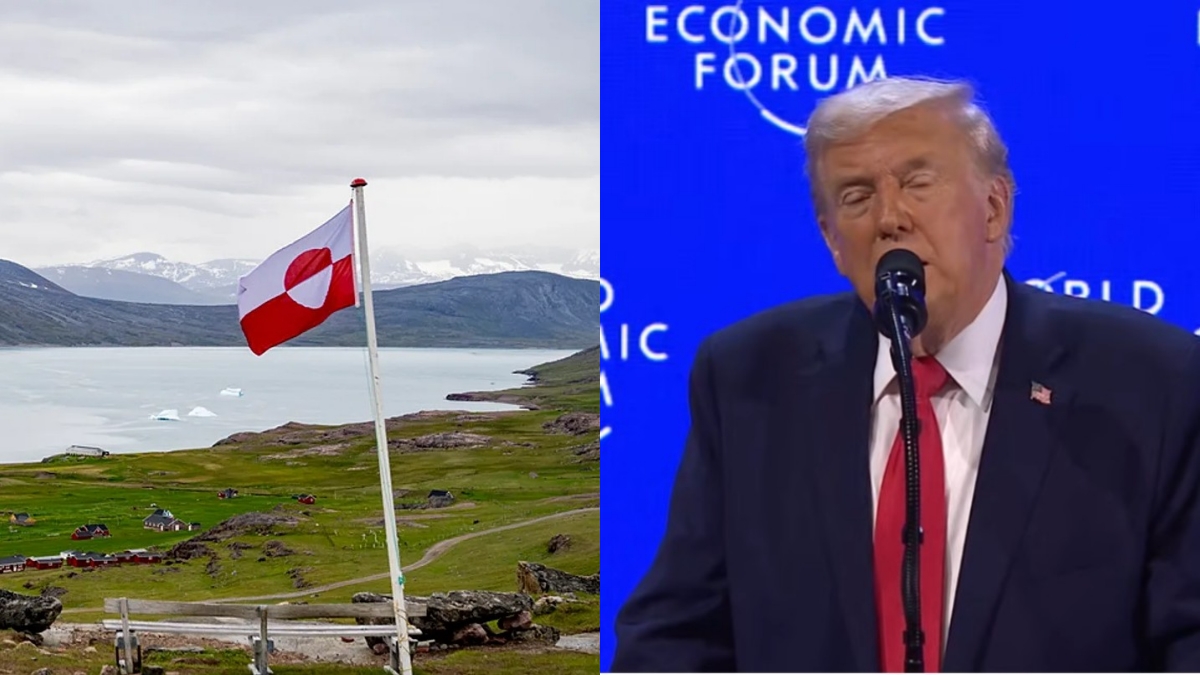
- US President Donald Trump said a long-term framework deal on Greenland and the Arctic had been reached after talks with NATO chief Mark Rutte.
- Trump said he would drop threats to seize Greenland by force and abandon planned tariffs on Denmark and European allies.
- Key issues, including Danish sovereignty over Greenland, remain unresolved, with NATO officials saying significant work lies ahead.
US President Donald Trump said on Wednesday, 21 January, that he had reached a framework for a long-term deal on Greenland, marking a dramatic shift from earlier threats to seize the island by force and impose tariffs on European allies.
Trump announced the development after meeting NATO Secretary-General Mark Rutte on the sidelines of the World Economic Forum in Davos, Switzerland, according to remarks made at the event and on his Truth Social platform.
“We have formed the framework of a future deal with respect to Greenland and, in fact, the entire Arctic Region,” Trump wrote, describing the agreement as long-term but offering few concrete details.
The president said the framework satisfied US demands and would lead him to abandon plans to impose tariffs of up to 25 per cent on Denmark and other European allies from 1 February.
Those countries, including Britain, France and Germany, had sent troops to Greenland in solidarity with Denmark amid Trump’s earlier threats.
Speaking later to reporters from several outlets, including AFP, Trump said the deal “gets everything we wanted” and would be in force “forever”.
However, he was notably vague on whether the agreement would grant the United States sovereignty over Greenland, an outcome he has repeatedly demanded in the past.
Asked directly whether the United States would gain control over the vast but sparsely populated Arctic island, Trump hesitated before replying, “It’s the ultimate long-term deal.”
He added that the agreement would benefit all parties, particularly in areas such as security and access to minerals.
“I think it puts everybody in a really good position, especially as it pertains to security, and minerals and everything else,” Trump said.
NATO Secretary-General Mark Rutte struck a more cautious tone, telling AFP that substantial work remained before any final agreement could be concluded.
“I think it was a very good meeting tonight. But there’s still a lot of work to be done,” Rutte said at Davos.
Rutte also confirmed that the sensitive issue of Danish sovereignty over Greenland was not discussed during his talks with Trump.
Asked later by Fox News whether Greenland would remain a territory of Denmark, Rutte said the matter “did not come up anymore” in his conversations with the US president.
Instead, he said discussions focused on broader Arctic security concerns, particularly growing activity by China and Russia in the region.
“He’s very much focused on what do we need to do to make sure that that huge Arctic region, where change is taking place at the moment, where the Chinese and Russians are more and more active, how we can protect that,” Rutte said.
He reiterated that NATO and the United States had agreed to begin working collectively on measures to ensure security across the Arctic.
NATO spokesperson Allison Hart said allies would discuss the framework, which addresses Trump’s long-standing claims that Greenland is vulnerable to influence or control by Russia or China.
“Negotiations between Denmark, Greenland, and the United States will go forward aimed at ensuring that Russia and China never gain a foothold – economically or militarily – in Greenland,” Hart said.
Trump’s earlier threats had triggered one of the most serious transatlantic crises in decades, raising concerns that he could undermine NATO by targeting a fellow member state.
In Denmark, his remarks had caused widespread shock and anger, with political leaders warning of a breakdown in trust with a key ally.
Following Trump’s apparent climbdown, Danish Foreign Minister Lars Lokke Rasmussen welcomed the change in tone.
“Trump said that he will pause the trade war, he says, ‘I will not attack Greenland’. These are positive messages,” Rasmussen told Danish public broadcaster DR.
Dutch Prime Minister Dick Schoof also said the situation appeared to be easing, describing the latest developments as a move “on the path to de-escalation”.
Trump has repeatedly argued that the United States deserves control over Greenland because it would be expected to defend the island against potential threats from Russia or China.
Neither country has made any formal claim to Greenland, but both have increased their Arctic presence in recent years.
The Greenland issue dominated Trump’s first address to the World Economic Forum in six years, during which he criticised Denmark as “ungrateful” for refusing to relinquish the territory.
However, he appeared to take the possibility of military action off the table during his Davos remarks.
“I don’t want to use force. I won’t use force. All the United States is asking for is a place called Greenland,” Trump said.
The shift in rhetoric was welcomed by global markets, with major Wall Street indices rising amid reduced fears of escalating trade and geopolitical tensions.
Before Trump’s reversal, Greenland’s government had unveiled a brochure advising residents on how to respond in the event of a “crisis”, describing it as an “insurance policy”.
Trump continued to reference Greenland in his Davos speech, at times mistakenly calling it Iceland, while also criticising Europe’s economic and security policies.
He renewed attacks on European leaders, including French President Emmanuel Macron and Canadian Prime Minister Mark Carney, despite earlier signs of unity among US allies.
In remarks that ranged widely, Trump also said he hoped to bring the war in Ukraine to an end soon and expected to meet President Volodymyr Zelenskyy in Davos on Thursday.