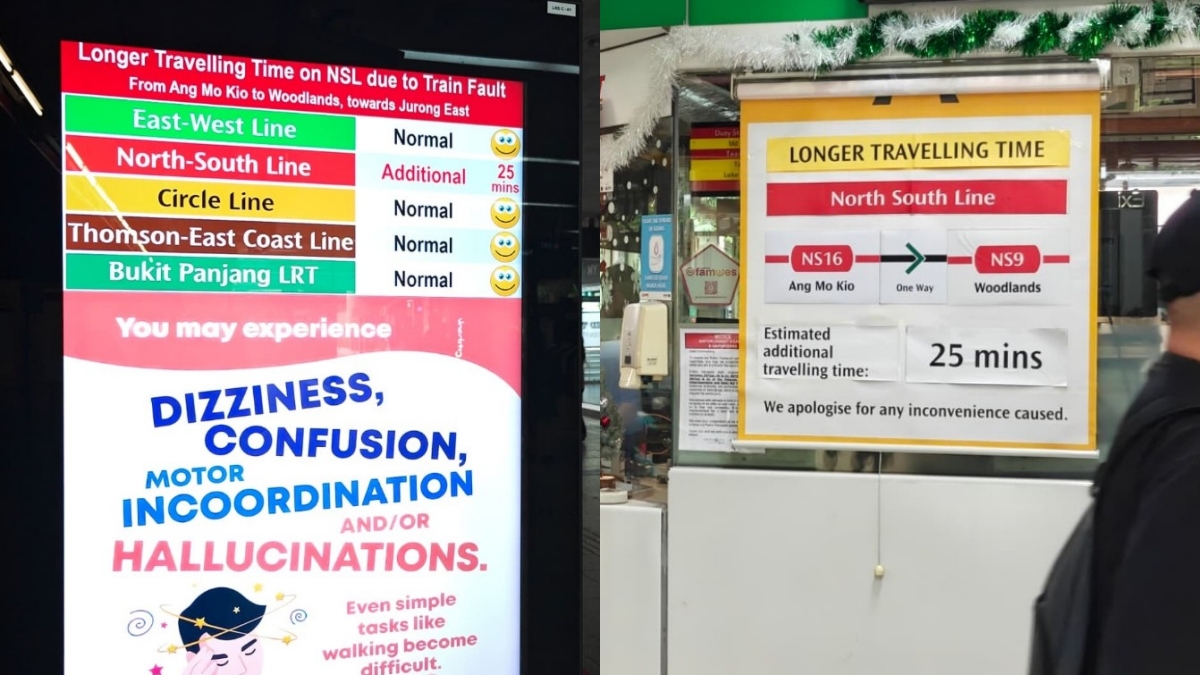
LTA: Rail operators to prioritise station-level communication for 'minor delays' under 30 minutes
LTA said rail operators will prioritise localised communications for minor MRT delays lasting under 30 minutes, following commuter feedback and recent disruptions on the East-West and Thomson-East Coast lines.
SINGAPORE: The Land Transport Authority (LTA) has announced a shift in how minor MRT delays will be communicated, with rail operators set to prioritise localised updates for commuters at affected stations.
According to LTA, this change applies to delays lasting under 30 minutes and affecting shorter stretches of the network.
Responding to state media The Straits Times, the authority said the move responds to feedback that maximum additional travel time advisories do not reflect the varied impact on different commuters.
It noted that some passengers were making unnecessary detours based on generic information.
LTA’s comments followed public concern over limited updates on SMRT’s social media channels during disruptions on the Thomson-East Coast Line on 18 November 2025 and the East-West Line on 2 December 2025.
These concerns highlighted a perceived gap between station announcements and online communication.
LTA stated that the new approach aligns with recommendations from a rail reliability task force convened in September 2025.
The task force was formed after at least 15 disruptions across MRT and LRT lines between July and September 2025.
It has been tasked with improving reliability and strengthening disruption response measures.
LTA added that it intends to provide more accurate online journey-time information based on commuters’ specific locations and destinations.
It said this would improve journey planning and reduce unnecessary diversions during faults.
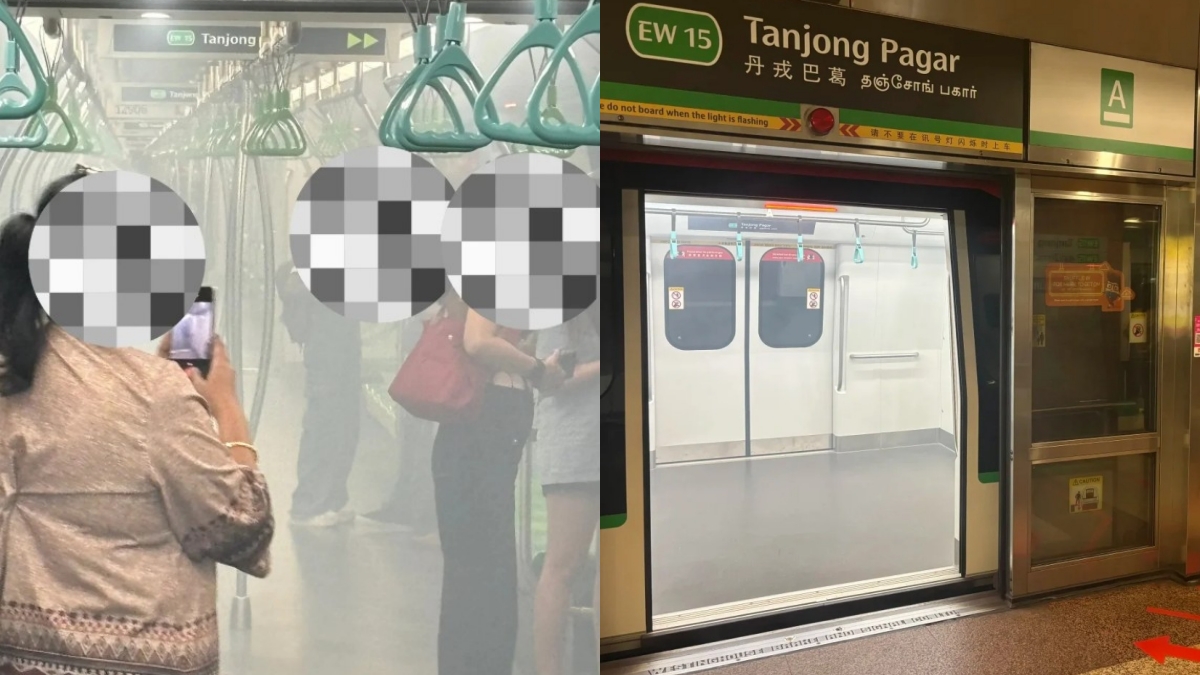
The announcement comes after the 2 Dec disruption on the EWL which caused confusion among evening peak-hour commuters near Aljunied station.
According to reports, the fault was first publicised at Lavender station at around 8.00pm.
SMRT’s on-site announcements indicated that the disruption was due to a track fault near Aljunied and advised of an additional 20 minutes of travel time between Bugis and Bedok.
A free shuttle service was also arranged along the affected section.
However, no corresponding update was posted on SMRT’s social media platforms, prompting questions from commuters.
SMRT confirms track point failure on 2 Dec; questions remain on communication
Responding to queries from ST, SMRT Trains president Lam Sheau Kai confirmed the cause as a track point failure at around 7.50pm.
He explained that a shuttle train loop was activated between Lavender, Kallang, Aljunied and Paya Lebar stations.
This resulted in approximately 20 minutes of additional travel time along the affected East-West Line segment.
Lam said normal services progressively resumed from 9.15pm, adding that the rest of the line had operated as planned except for pre-scheduled closures between Bedok and Tampines, and between Tanah Merah and Expo.
He stated that staff and engineers responded promptly to resolve the issue.
Communication standards and regulatory expectations
The rail reliability task force’s mandate includes reviewing how service recovery information is delivered.
In Parliament on 22 September 2025, Acting Transport Minister Jeffrey Siow highlighted the need for passengers to access alternative route information and travel-time estimates from a centralised source.
He suggested that such information could be consolidated into a single application for ease of use during disruptions.
Existing standards require operators to inform commuters of delays exceeding 10 minutes through station announcements and mainstream and social media channels.
These requirements have been in place since 30 November 2017.
Louis Chua, a Member of Parliament for Sengkang GRC from the Workers’ Party, asked in Parliament whether any operator had failed to comply with these requirements.
Acting Minister Siow said operators had met the communication standards over the past five years, adding that no penalties had been necessary.
He noted, however, that these standards formed only a basic requirement and improvements would be pursued.
Rail reliability and recent history
Singapore’s rail system has faced multiple disruptions in recent months.
Between July and September 2025 alone, at least 15 delays or interruptions were recorded across the MRT and LRT networks.
In response, the LTA established a Rail Reliability Taskforce in October 2025, which includes a five-member Independent Advisory Panel chaired by LTA chief executive Ng Lang.
On 11 November, commuters reported delays of up to 25 minutes on the East–West Line between Tanah Merah and Pasir Ris due to a track point fault, with no corresponding updates from SMRT on its social media channels.
According to LTA’s latest rail reliability figures released on 14 November, the MRT network recorded a second consecutive month of declining reliability.
From October 2024 to September 2025, trains averaged 1.67 million train-kilometres between delays of more than five minutes.
While long-term investments — such as the replacement of over 1,100 track circuits under the CBTC signalling system — aim to improve fault detection and response, the recent spate of incidents suggests continued communication issues during disruptions.