Thai politician questions presence of Chinese weapons seized from Cambodian troops
A Thai politician has demanded explanations from China after Thai troops seized Chinese-made anti-tank weapons from Cambodian soldiers in Ubon Ratchathani, raising questions over arms transfers amid escalating border tensions.
- A Thai opposition politician has called on the Chinese Embassy to explain how Chinese-made anti-tank weapons reached Cambodian troops.
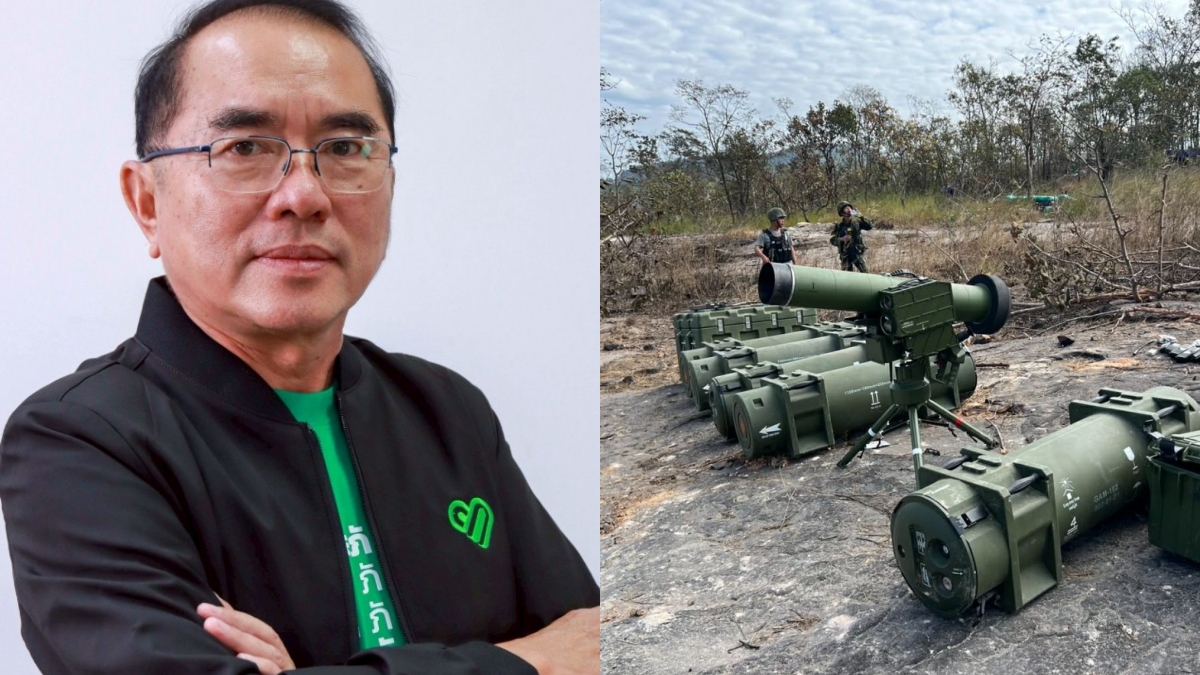
- Thai forces seized a cache of Chinese-manufactured weapons, including a guided anti-tank missile, during fighting near the Thai–Cambodian border.
- China has expressed concern over the conflict and said it is supporting ASEAN-led mediation efforts.
Thai politician Dr Warong Dechgitvigrom has questioned the presence of Chinese-made anti-tank weapons seized from Cambodian troops, calling on the Chinese Embassy in Thailand to provide an explanation amid ongoing border fighting.
Dr Warong, leader of the Thai Pakdee Party, said on 16 December 2025 that Thai people were deeply concerned after Chinese-manufactured guided anti-tank missiles were found in the hands of Cambodian soldiers.
According to Dr Warong, the issue carries particular sensitivity given the long-standing close relationship between Thailand and China, including historic security cooperation during the late 1970s.
He referred to China’s 1979 military action against northern Vietnam, which he said helped ease pressure on Thailand at a time when Vietnamese forces were active in Cambodia.
Dr Warong also cited the recent visit to China by Their Majesties the King and Queen, describing it as a further sign of strong bilateral relations between Bangkok and Beijing.
Despite these ties, he said the discovery of advanced Chinese weaponry on the battlefield demanded clarification from the Chinese government, particularly for the reassurance of the Thai public.
The weapons in question wereafter they captured a Cambodian military position known as Mount 500, located in the Chong An Ma area of Nam Yuen district, Ubon Ratchathani province.
Dr Warong highlighted the presence of a GAM-102LR guided anti-tank missile among the seized equipment, describing it as a serious concern for Thailand’s national security.
Earlier, Defence Minister General Nattapon Nakpanich addressed reports of a significant cache of Chinese-made weapons confiscated from Cambodian troops in the same area.
General Nattapon said the weapons were recovered near Hill 500, which had recently been reclaimed by Thai forces following clashes along the border.
According to a post by the Army Military Force dated 15 December, soldiers from the 2nd Battalion of the 17th Infantry Regiment secured the weapons after clearing the area.
The cache included 82mm projected grenades known as Type 65, Type 65-1 recoilless grenade launchers, and Norinco PF-89, also referred to as Type 89, anti-tank rocket launchers.
The PF-89 is a single-use portable rocket system manufactured by China’s state-owned defence company Norinco, designed for infantry use against armoured vehicles and fortified positions.
Weighing about 3.7 kilograms, the system has several variants, including versions capable of defeating reactive armour and others fitted with thermobaric warheads for use in enclosed spaces.
The Army Military Force post also revealed that a Chinese-made GAM-102LR guided anti-tank missile system was seized a day earlier by the same Thai unit.
The GAM-102LR has been described by military analysts as a fifth-generation guided anti-tank weapon, raising questions about how such equipment reached frontline Cambodian units.
Addressing speculation about the weapons’ origins and possible foreign involvement, General Nattapon said investigations were still under way.
“Intelligence work has yet to confirm anything,” he said, adding that no official request had been received from Chinese authorities regarding the return of the seized weapons.
General Nattapon stressed that, under Thai military regulations, all seized weapons fall under the custody of the Thai armed forces.
“Once seized, they are effectively ours – we can choose to use them or destroy them,” he said. “For now, they remain under examination.”
He did not speculate on whether the weapons were supplied directly by a foreign government or obtained through other channels.
Meanwhile, the Chinese Embassy in Bangkok released a statement quoting the Chinese Foreign Ministry, expressing concern over the loss of lives on both sides of the conflict.
The statement said China regretted the deaths of people in Thailand and Cambodia resulting from the current armed clashes.
It added that the most urgent task was to achieve a ceasefire between the two countries and to prevent further escalation.
According to the statement, since the outbreak of hostilities, China has been communicating with both Thailand and Cambodia through various channels and at different levels.
The Chinese Foreign Ministry said these efforts were aimed at encouraging dialogue and supporting mediation initiatives led by the Association of Southeast Asian Nations.
In particular, China voiced support for Malaysia’s role in facilitating talks between the two sides as part of ASEAN’s mediation efforts.
The statement concluded by saying that China would continue to do its best to promote peace talks and contribute to a negotiated settlement between Thailand and Cambodia.