Thailand and Cambodia to resume ceasefire talks amid renewed border fighting
Thailand and Cambodia will resume ceasefire talks on 24 December 2025 under ASEAN auspices, even as renewed border fighting displaces nearly one million civilians and threatens regional stability.
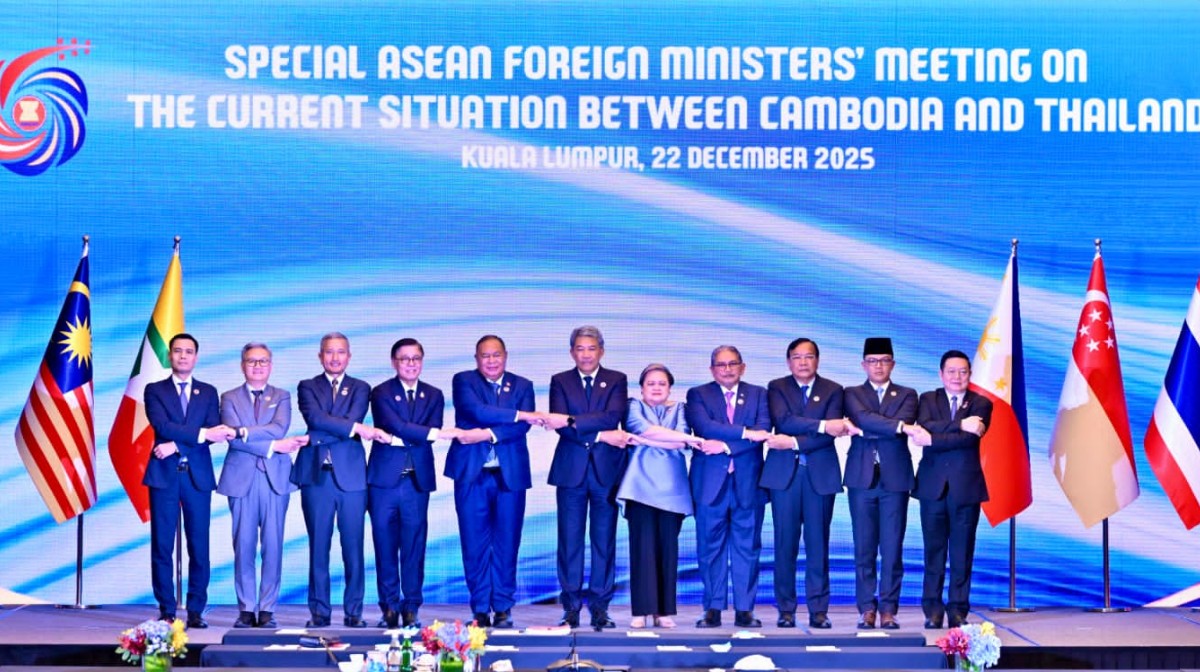
- Thailand and Cambodia will resume ceasefire discussions on 24 December 2025 through their General Border Committee, following renewed fighting along the border.
- At least 40 people have been killed since clashes resumed on 8 December, with nearly one million civilians displaced on both sides.
- ASEAN, led by Malaysia, is intensifying diplomatic efforts amid continued violence and allegations of air strikes and heavy weapons use.
KUALA LUMPUR, MALAYSIA: Thailand and Cambodia have agreed to resume ceasefire discussions on 24 December 2025, even as fresh fighting erupted along their shared border early on Monday, 22 December, underscoring the fragility of regional efforts to halt the conflict.
The decision was announced after a Special ASEAN Foreign Ministers’ Meeting held in Kuala Lumpur on 22 December, convened to address the escalating violence between the two neighbouring states.
According to Thailand’s Foreign Minister Sihasak Phuangketkeow, defence officials from both countries will meet under the framework of the General Border Committee, an established bilateral mechanism for managing frontier disputes.
Thailand has proposed that the talks take place near the border in Chanthaburi province, with a focus on achieving what Sihasak described as a “true ceasefire” supported by a detailed and enforceable implementation plan.
“A ceasefire cannot just be declared, it needs a discussion,” Sihasak told reporters after the meeting, adding that de-mining efforts would be essential to restoring stability along contested areas.
Fighting enters third week
The border conflict, which reignited on 8 December 2025, has now entered its third week, despite earlier attempts at de-escalation.
At least 40 people have been killed since the latest round of fighting began, while nearly one million civilians have been displaced across both countries, according to official figures released by Thai and Cambodian authorities.
ASEAN’s intervention follows an earlier truce brokered in July by Malaysia, the current ASEAN chair, together with United States President Donald Trump, after a previous escalation.
That ceasefire subsequently collapsed, with renewed hostilities prompting concerns about wider regional instability.
ASEAN seeks to salvage truce
The Special ASEAN Foreign Ministers’ Meeting brought together diplomats amid continued clashes, highlighting the urgency of regional mediation.
In his opening remarks, Malaysian Foreign Minister Mohamad Hasan expressed hope that the meeting would reinvigorate efforts to restore calm.
“It is my hope that this special meeting will renew our efforts for a return to stability in the affected areas,” Hasan said, according to remarks shared with the media.
“Our goal goes beyond de-escalating the tension. We must intensify trust-building among the conflicting parties and provide the horizons for dialogue despite the prevailing differences,” he added.
Malaysia’s Prime Minister Anwar Ibrahim said on X on Sunday that he had emphasised the importance of dialogue, wisdom and mutual respect in his conversations with both governments.
Anwar added that he had spoken directly with the two prime ministers, urging restraint and a commitment to peace and regional stability.
Conflicting accounts of latest violence
Even as diplomats met in Kuala Lumpur, both sides reported fresh violence along the border early on Monday.
The Cambodian Ministry of National Defence accused Thailand of deploying F-16 fighter jets that dropped four bombs in Banteay Meanchey province and of firing what it described as “toxic gas” in the Prey Chan village area.
According to a report by the Agence Kampuchea Press state news agency, Cambodian forces said they were monitoring the situation closely and remained “steadfast in their defence” of territorial integrity.
The Cambodianess news outlet, citing the Cambodian army, also reported artillery shelling in several parts of Battambang province, leaving at least one civilian wounded.
Thailand, however, offered a different account of the incidents.
Thai media reported an “exchange of fire” in Sa Kaeo province early on Monday, stating that Cambodian forces had fired heavy weapons, causing fires and damage to homes in the Khok Sung district.
Thai Prime Minister Anutin Charnvirakul insisted that Thailand had never acted as the aggressor, telling reporters on Sunday that nearly all areas previously encroached upon by Cambodian forces had been reclaimed.
Mounting humanitarian toll
The humanitarian impact of the conflict continues to grow.
Cambodian Prime Minister Hun Manet’s office said that as of Sunday evening, approximately 525,000 civilians had been displaced on the Cambodian side of the border.
Cambodia’s interior ministry also confirmed that one additional civilian was killed in Oddar Meanchey province as of Sunday.
Thai authorities reported that around 400,000 people had been displaced within Thailand, as communities near the frontier fled ongoing shelling and ground clashes.
Earlier ASEAN statements noted that initial displacement figures exceeded half a million people following two weeks of intense fighting, with later assessments indicating a significantly higher total.
International involvement and limits
While both the United States and China have pursued separate diplomatic efforts to end the conflict, neither has so far achieved a breakthrough.
Sihasak stressed that neither Washington nor Beijing was involved in the decision to resume talks on 24 December.
“This is about Thailand and Cambodia working things out,” he said, emphasising the bilateral nature of the upcoming discussions.
Cautious optimism ahead of talks
The US Department of State urged both sides on Sunday to end hostilities, withdraw heavy weapons, cease the emplacement of landmines, and fully implement the Kuala Lumpur Peace Accords.
It said it welcomed ASEAN leaders coming together to support both countries in honouring their commitments to end the conflict.
Anwar Ibrahim said last week that he was “cautiously optimistic” about the outcome of ASEAN’s engagement, noting that both Anutin and Hun Manet appeared keen to reach an amicable resolution as soon as possible.