Thailand rejects mediation in Cambodia border crisis, demands accountability over landmine claims
Thailand has ruled out mediation in its escalating border conflict with Cambodia, demanding accountability over alleged landmine violations and the deaths of Thai nationals, while seeking an unprecedented UN fact-finding mission.
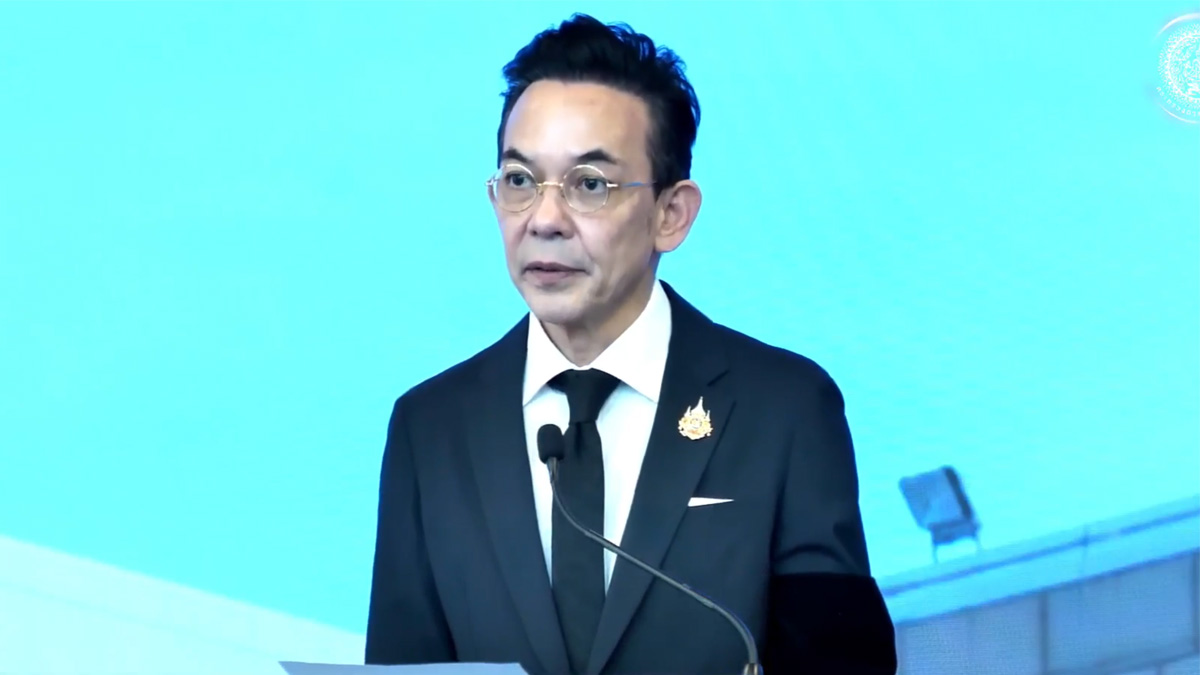
- Thailand rejects third-party mediation amid deadly clashes with Cambodia, insisting confidence must be restored before talks.
- Bangkok seeks an unprecedented UN fact-finding mission over alleged landmine violations.
- More than 500,000 people have been displaced by intensified fighting along the contested border.
Thailand has firmly ruled out any third-party mediation in its escalating border conflict with Cambodia, citing the need to restore public confidence and ensure national security following the deaths of Thai nationals.
Speaking on 10 December, 2025, at a Ministry of Foreign Affairs (MFA) press conference, spokesperson Nikorndej Balankura stressed that the situation had "crossed a line", and diplomatic talks could only resume once territorial integrity and civilian safety were guaranteed.
"The timing is not now," Nikorndej stated, in response to queries about international mediation.
He reiterated that Thailand would not accept any formal proposals from other states, including Malaysia, which had expressed a desire for bilateral talks to resume.
Unconfirmed reports that US President Donald Trump had planned to intercede were also dismissed, with Nikorndej confirming that no formal communication had been received from Washington.
"If contact is made, the expected response will be that Thailand is not ready," he added.
UN mechanism invoked over alleged landmine violations
In a significant diplomatic escalation, Thailand has invoked a rarely used clause under an international convention to request a United Nations fact-finding mission into Cambodia's alleged use of landmines within Thai territory.
This marks the first time Thailand has pursued such a mechanism since the relevant treaty entered into force.
The MFA alleges that Cambodia has laid new mines in violation of international obligations and avoided cooperation on bilateral demining efforts.
"This action is necessary to uphold the integrity of the convention," Nikorndej said.
Earlier attempts to clarify the situation through the UN Secretary-General under Article 8 were described as "less than satisfactory".
The Thai government has committed to pursuing the issue through international legal channels until full accountability is achieved, although no timeline has yet been confirmed.
Civilian evacuations and heightened military alert
The fighting, described as the deadliest since July 2025, has triggered mass evacuations on both sides of the border.
According to defence authorities, more than 400,000 people have been relocated across seven Thai provinces, while Cambodian officials report over 100,000 evacuees across five provinces.
Half a million people were sheltering in temples, schools and public buildings on 10 December.
"We want to prevent a recurrence of the attacks on civilians we suffered in July," Thai defence ministry spokesperson Surasant Kongsiri said.
Residents in frontline areas such as Thailand’s Sa Kaeo province reported increasingly intense bombardment.
One resident, Pratuan Chuawong, described fears for her safety after hearing shellfire:
"The sound of shells gets louder and louder each night. I kept wondering, 'Will it hit us?'"
In Cambodia, towns near disputed temples have also come under fire. One evacuee, Lay Non, told AFP:
"This time the fighting is more intense, the Thais drop bombs from jets."
Unverified attacks and Thai response
At the press briefing, the MFA spokesperson addressed unconfirmed reports that a BM21 rocket had struck Phanom Mak Hospital in Thailand. He stated that verification would be handled at a multi-agency meeting later that day.
Reports of five Thai soldiers killed were also unconfirmed and pending review by defence authorities.
Nikorndej reiterated that the safety of Thai civilians remains the government’s top priority, with demining operations continuing in disputed border areas.
Travel advisory and diplomatic guidance
Thailand has issued a travel advisory urging nationals in Cambodia to return home unless their presence is essential.
An estimated 600 to 1,200 Thai citizens remain in Cambodia, with the Royal Thai Embassy and consular services providing emergency support.
"Thailand's actions are guided by one sole purpose: to protect Thailand's sovereignty and ensure the safety of the Thai people," said Nikorndej.
Broader fallout: Sports and diplomacy
The crisis has had immediate ripple effects on non-political exchanges. Cambodia’s Olympic committee formally withdrew its athletes from competitions in Thailand, citing serious security concerns and direct requests from families to have their relatives return home.
In a letter to Thai authorities, the Cambodian side expressed appreciation for the safety measures and facilitation provided. Thai officials respected the decision and reiterated their commitment to separating sporting events from the ongoing border tensions.
Thailand’s Prime Minister had earlier directed all agencies to ensure the highest level of safety for visiting athletes, stating that sports should remain insulated from political or military developments.
US involvement and diplomatic outlook
In July 2025, a previous outbreak of fighting was halted following US-led diplomatic efforts and a ceasefire agreement brokered alongside China and Malaysia.
In October, President Trump supported a joint declaration and economic agreements linked to peace terms, but Thailand later suspended its participation.
At a political rally in Pennsylvania on 9 December, Trump referenced the renewed conflict, saying: "Tomorrow, I have to make a phone call, and I think they'll get it."
Despite this, Thai authorities maintain that no direct outreach has occurred.
Both Thailand and Cambodia continue to blame each other for reigniting the conflict, which now spans five provinces in each country.
The century-old border dispute — rooted in colonial-era demarcation disagreements and overlapping claims to historic temples — shows no sign of immediate resolution.