Indonesian parliament backs Prabowo nephew as central bank deputy, reigniting nepotism concerns
Indonesia’s parliament has approved President Prabowo Subianto’s nephew as a deputy governor of the central bank, a move that has reignited debate over nepotism and the independence of monetary policy.
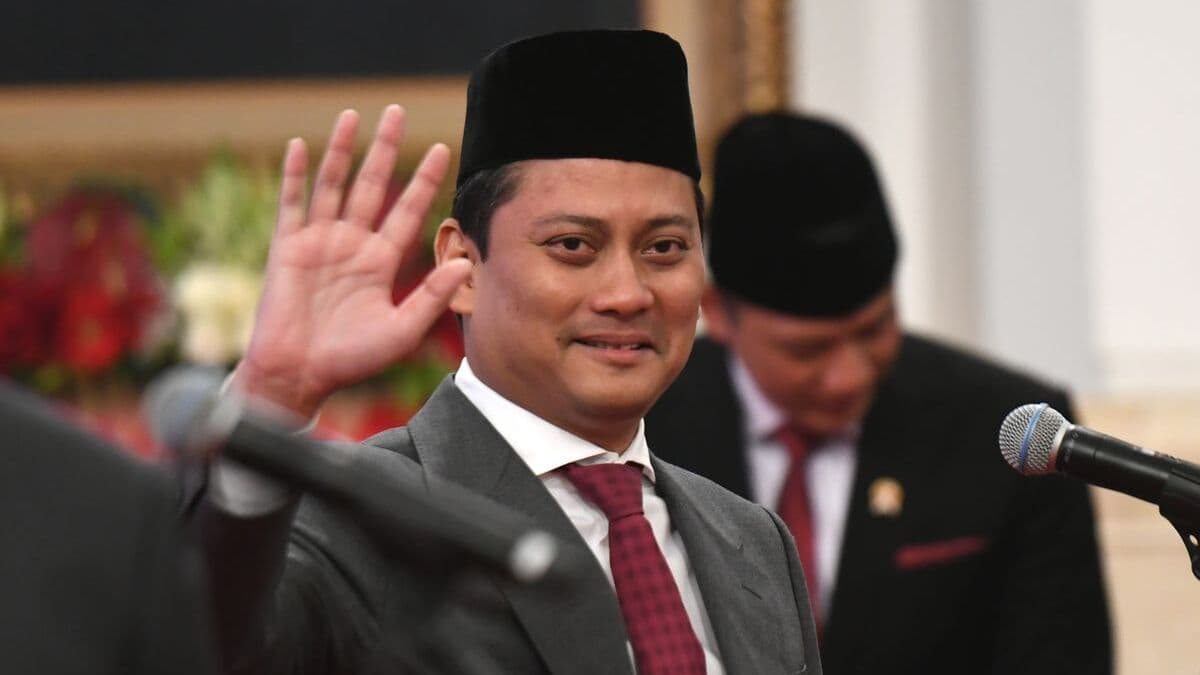
- Indonesia’s House of Representatives has approved Deputy Finance Minister Thomas Djiwandono as a Deputy Governor of Bank Indonesia for 2026–2031.
- The appointment has revived concerns over nepotism and the independence of the central bank.
- Lawmakers defended the decision as lawful and professional, while critics warn of informal influence and erosion of meritocracy.
Indonesia’s House of Representatives (DPR) has approved the appointment of Deputy Finance Minister Thomas Djiwandono as a Deputy Governor of Bank Indonesia (BI) for the 2026–2031 term, a decision that has reignited public debate over nepotism and the independence of the country’s central bank.
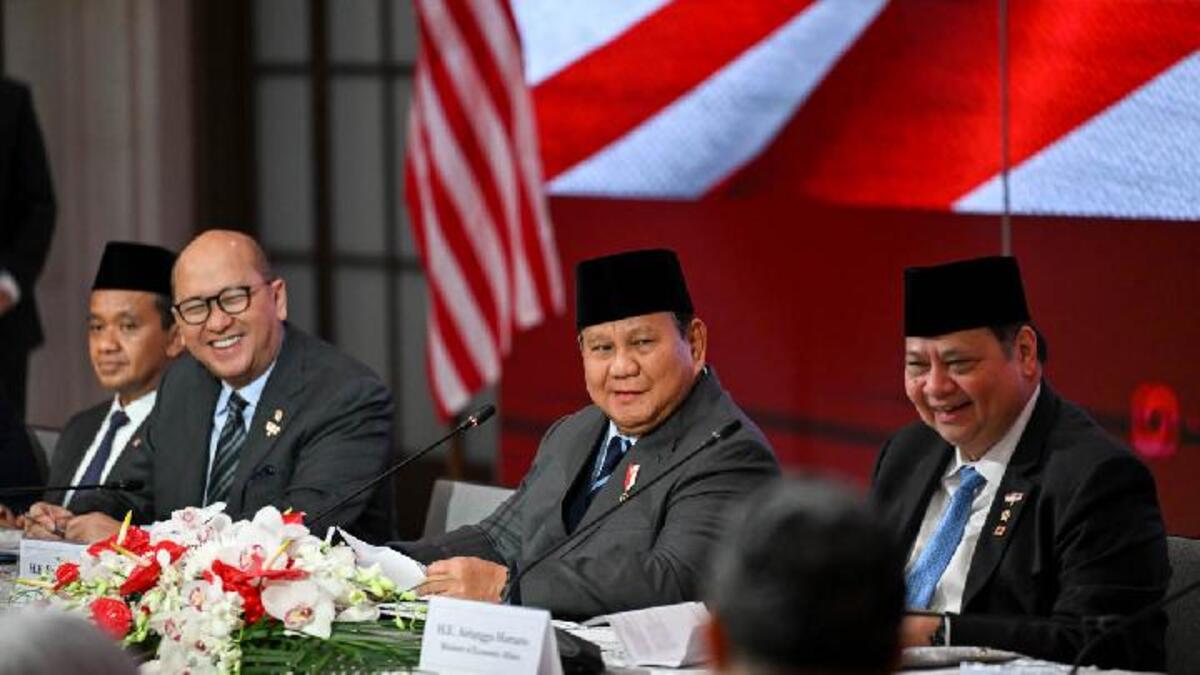
The approval was granted during the DPR’s 12th plenary session, attended by 339 of the 580 members of parliament.
The session was chaired by Deputy Speaker Saan Mustopa, who invited the chair of Commission XI, Mukhamad Misbakhun, to present the report on the fit-and-proper test for the candidate.
Parliamentary approval and legal basis
In his presentation, Misbakhun outlined the governance structure of Bank Indonesia as regulated under Law No. 23 of 1999 on Bank Indonesia, as amended by Law No. 4 of 2023 on the Development and Strengthening of the Financial Sector.
Under this framework, the central bank is led by a governor and several deputy governors, all of whom sit on the Board of Governors.
Legally, the Board of Governors functions as a collective body that exercises all of BI’s duties and authorities.
As such, deputy governors play a direct role in deliberating and determining monetary policy, including interest rate decisions.
Misbakhun noted that the law mandates that the governor, senior deputy governor, and deputy governors are nominated by the president and approved by the DPR.
Following a consultative meeting on 19 January 2026, Commission XI was assigned to conduct the fit-and-proper test.
An internal meeting the following day confirmed the schedule and procedures.
On Monday, 26 January 2026, after deliberation and consensus, Commission XI agreed to approve Thomas Djiwandono to replace outgoing deputy governor Juda Agung. The recommendation was then brought to the plenary session.
After seeking the assembly’s consent, Saan Mustopa struck the gavel.
“Honourable members of the House, may we now ask this esteemed assembly whether the report of Commission XI of the DPR RI on the results of the fit-and-proper test for the candidate Deputy Governor of Bank Indonesia can be approved?” he asked.
The response—“Approved”—formally confirmed the appointment.
The same plenary session also endorsed several other high-profile appointments, including DPR Deputy Speaker Adies Kadir as a justice of the Constitutional Court, nine members of the Indonesian Ombudsman for the 2026–2031 term, and new members of the National Zakat Agency (Baznas).
Selection process and political considerations
Thomas Djiwandono emerged as the successful candidate following assessments conducted by Commission XI.
His two rivals were Solikin Juhro, head of BI’s Macroprudential Policy Department, and Dicky Kartikoyono, head of BI’s Payment Systems Policy Department.
Solikin underwent his fit-and-proper test on Friday, 23 January, while Dicky and Thomas were assessed on Monday afternoon, 26 January.
Thomas’s name was announced as the chosen deputy governor less than 30 minutes after he completed the process.
Misbakhun said the decision was reached unanimously through deliberation and consensus, with no objections raised by parliamentary factions.
He added that Thomas was selected partly because he was seen as a figure acceptable to all political parties.
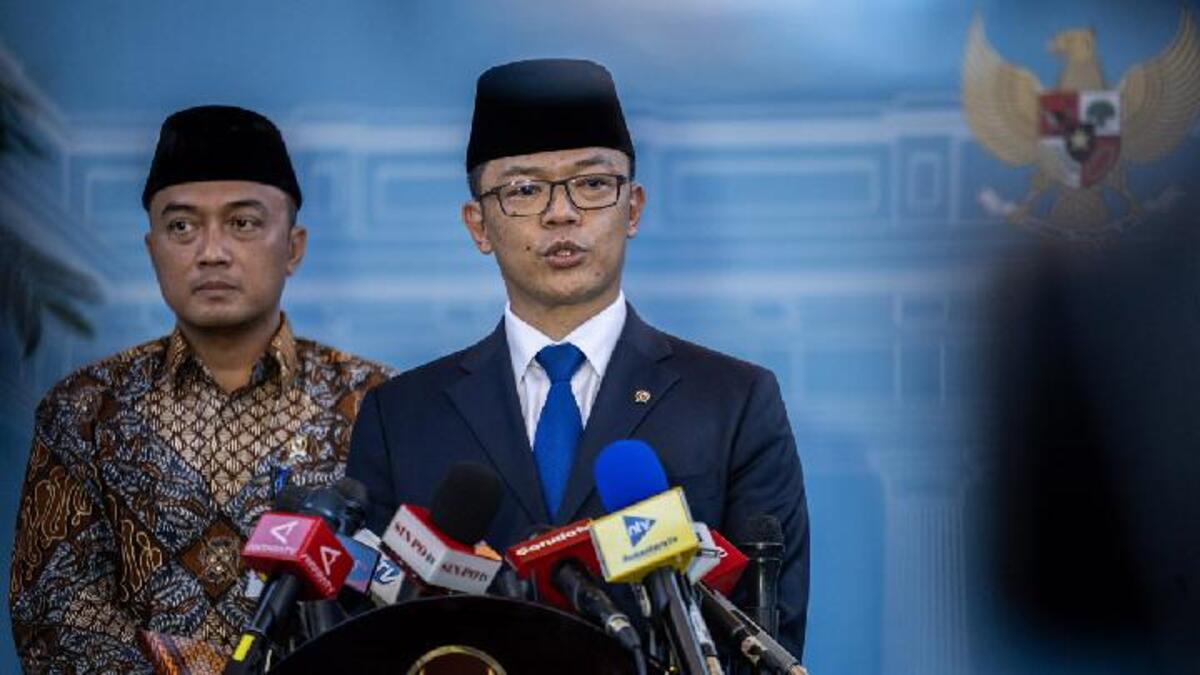
The lawmaker also dismissed concerns that appointing the president’s nephew could undermine BI’s independence, arguing that Thomas had explained policy formulation “very professionally” during the hearings.
Family ties and international scrutiny
Thomas Djiwandono is the nephew of President Prabowo Subianto, a fact that has drawn attention both domestically and internationally.
Reuters has reported that Prabowo’s decision to nominate his nephew to the BI Board of Governors raised concerns among investors about potential pressure on Indonesia’s traditionally independent monetary policy, particularly as the president has set an ambitious target of boosting economic growth to as high as 8 per cent by 2029.
Those concerns have been amplified by BI’s recent history, including the introduction last year of a burden-sharing scheme to help finance government programmes.
Although Thomas has since stressed that future coordination between fiscal and monetary authorities would focus on improving policy transmission rather than reviving burden sharing, scepticism remains.
Prabowo’s own remarks on favouritism
The debate over nepotism has been further fuelled by Prabowo’s own public remarks in late 2025.
Speaking after witnessing the destruction of narcotics at National Police Headquarters, the president initially insisted that he had never interfered in police affairs.
“I don’t interfere, I don’t make requests for a single official, I don’t make any requests. Right, Chief of Police?” Prabowo said, addressing the national police chief during the event.
However, he then contradicted that assertion by admitting that he had once “put in a word” for one to three of his former bodyguards to be accepted into police non-commissioned officer training. “It’s allowed, isn’t it, if I make a request?” he said at the time.
The remarks triggered criticism and were widely interpreted as an acknowledgement of informal influence within state institutions—an issue that has now resurfaced following his nephew’s rapid elevation to the central bank’s top leadership.
Security analyst Bambang Rukminto of the Institute for Security and Strategic Studies (ISESS) described such practices as a legacy of feudal culture, arguing that meritocracy has yet to become fully entrenched in Indonesia’s bureaucracy.
According to Bambang, favouritism based on personal closeness is often rationalised as a form of appreciation, but it risks undermining professional standards and anti-nepotism principles.
Historical and legal context
Scholars have long linked nepotism in Indonesia to deeper historical patterns.
In a 1999 essay, academic Suhartono traced bureaucratic favouritism to feudal governance traditions in Java, where power and office were concentrated among royal relatives.
These patterns, he argued, later manifested as entrenched bureaucratic elites.
More recent academic work has framed nepotism as both an ethical and legal violation.
Public administration scholar Sondang P. Siagian categorised nepotism as a form of “bureaucratic pathology”, alongside abuses of authority and corruption.
Other researchers have pointed to Law No. 28 of 1999 on State Administrators Free from Corruption, Collusion, and Nepotism, which explicitly defines nepotism as an unlawful act that prioritises family or cronies over the public interest.