Indonesian Parliament questions US$1bn Peace Board funding as debate over Gaza initiative deepens
Indonesia’s decision to join the Board of Peace on Gaza has sparked domestic debate, with parliament questioning funding plans and civil society raising concerns over legal and diplomatic implications.
- Indonesia’s decision to join the Board of Peace (BoP) on Gaza has triggered parliamentary and civil society scrutiny.
- Lawmakers say no discussion has taken place on reports of a potential US$1 billion contribution.
- Government officials and former diplomats defend participation, while critics warn of legal and geopolitical risks.
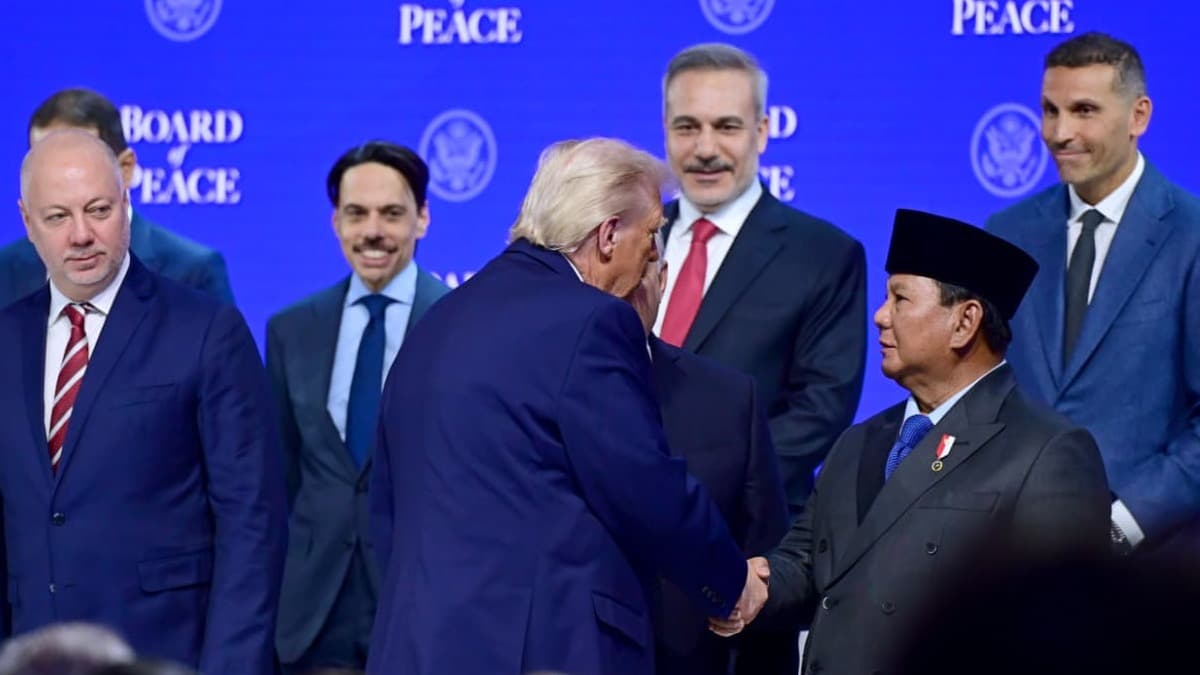
Indonesia’s decision to join the newly established Board of Peace (BoP), an international forum initiated by United States President Donald Trump to support peace and reconstruction efforts in Gaza, has sparked growing domestic debate, with parliament questioning the government’s funding plans and foreign policy implications.
Members of the House of Representatives (DPR), civil society organisations, and former senior diplomats have raised concerns over transparency, financial commitments, and the potential geopolitical risks associated with Indonesia’s participation in the initiative.
Parliament Says Funding Never Discussed
The latest controversy centres on reports that Indonesia could contribute up to US$1 billion to support reconstruction efforts linked to the Board of Peace.
Tb. Hasanuddin, a member of Commission I of the DPR, which oversees defence and foreign affairs, said parliament had never discussed any plan to use the defence budget to finance such a contribution.
“The most recent coordination meeting between Commission I and the Ministry of Defense on 26 January focused solely on the ministry’s 2025 performance and reinforcement plans for the Indonesian National Armed Forces for 2026–2029,” Hasanuddin said on Thursday, 5 February.
“To date, there has been no official discussion between Commission I and the Ministry of Defense regarding the use of the defence budget to pay the BoP membership fee, which is reportedly around US$1 billion,” he added.
Hasanuddin stressed that any allocation of defence funds for international purposes must undergo parliamentary consultation and oversight.
“The House has a constitutional duty to ensure that every rupiah from the state budget is used properly, transparently, and in accordance with national interests,” he said, warning that large and strategic expenditures cannot bypass parliamentary scrutiny.
Government Says Funds Meant for Gaza Recovery
Indonesia’s involvement in the Board of Peace was formally sealed when President Prabowo Subianto signed the charter during the World Economic Forum in Davos, Switzerland, in January.
At the time, Prabowo described participation as a “historic opportunity” to contribute to peace and humanitarian recovery in Gaza.
Foreign Minister Sugiono later clarified that Indonesia’s potential US$1 billion contribution should not be seen as a membership fee but as support for humanitarian and reconstruction efforts in Gaza.
“Therefore, invited members are encouraged to participate in that,” Sugiono told reporters at the DPR complex in Jakarta on 27 January.
Finance Minister Purbaya Yudhi Sadewa subsequently confirmed that any Indonesian contribution would come from the state budget and be channelled through the Ministry of Defense.
“Yes, it will go through the Ministry of Defense,” he said after attending the Indonesia Economic Summit in Jakarta earlier this week.
However, he emphasised that the government would apply cautious fiscal management to avoid new budgetary pressures, adding that options include budget adjustments or reorientation if necessary while maintaining fiscal discipline.
Former Diplomats Urge Realism, Caution
The issue was also discussed during a closed-door meeting convened by President Prabowo at the Presidential Palace on 4 February, attended by several former foreign ministers and deputy foreign ministers.
Among those present was former deputy foreign minister Dino Patti Djalal, who said Indonesia’s participation in the Board of Peace reflects a pragmatic assessment of current diplomatic realities.
“There is no other option on the table. The reality is that the Board of Peace is part of the solution to stop repeated ceasefire violations by Israel,” Dino told journalists after the meeting.
He described the initiative as an experiment rather than a guaranteed solution, noting it was initiated by President Trump and should not be seen as a “magic formula”.
A major challenge, he acknowledged, is Israel’s participation in the forum, including Prime Minister Benjamin Netanyahu’s involvement, which raises sensitivities domestically and internationally.
Nevertheless, Dino said Prabowo believes Indonesia can maintain balance while remaining aligned with the interests of Islamic countries.
“He said we are confident we can balance it, because everything we do must remain in harmony with Islamic nations,” Dino recounted.
Civil Society Raises Legal and Political Concerns
Human rights groups and legal experts have criticised Indonesia’s participation, arguing that the Board of Peace operates outside established United Nations mechanisms and risks weakening international legal frameworks governing conflict resolution and accountability.
Amnesty International Indonesia warned that joining a US-led initiative outside the UN system could undermine Indonesia’s credibility, particularly as the country currently holds the presidency of the UN Human Rights Council.
Critics also question whether Palestinian representatives were adequately involved in the formation of the Board, arguing that reconstruction plans should not proceed without clear guarantees of Palestinian self-determination.
Some analysts fear the initiative could prioritise political stabilisation and reconstruction while sidestepping accountability processes concerning alleged violations of international humanitarian law in Gaza.
Domestic civil society organisations have urged parliament to exercise oversight by summoning government officials to clarify Indonesia’s legal and diplomatic commitments under the initiative.