Journalists Safety Committee warns of information control in Sumatra disaster reporting
Indonesia’s Journalists Safety Committee says restrictions on disaster reporting in Sumatra amount to emergency-style controls that violate constitutional press freedom and risk silencing survivors’ voices.
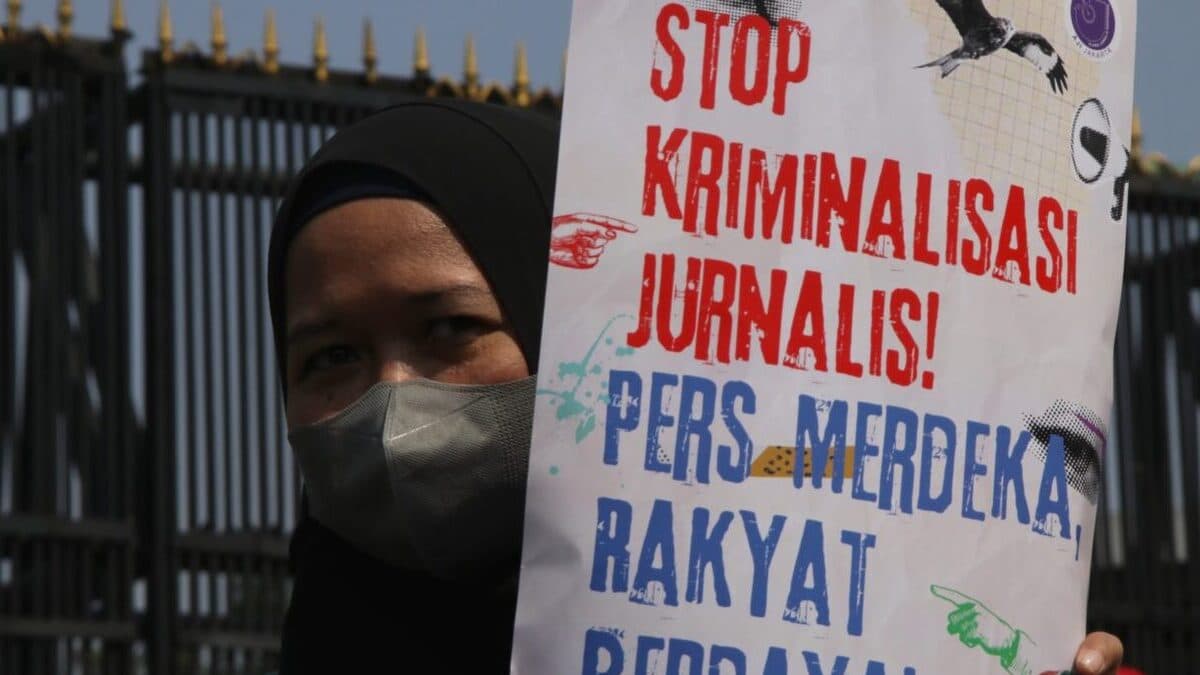
- The Journalists Safety Committee (KKJ) accused the state of imposing emergency-style restrictions on disaster reporting in Sumatra.
- KKJ cited intimidation, removal of reports, and broadcast restrictions following floods in Aceh, North Sumatra, and West Sumatra.
- The coalition urged President Prabowo Subianto to apologise publicly and guarantee full press freedom in disaster zones.
INDONESIA: The Journalists Safety Committee (KKJ) has accused the Indonesian state of imposing emergency-style restrictions on disaster reporting in Sumatra, warning that recent developments point to a systematic effort to control information and suppress coverage that contradicts official narratives.
In a strongly worded press release, the coalition said the government must publicly apologise to journalists and immediately restore full press freedom in disaster areas.
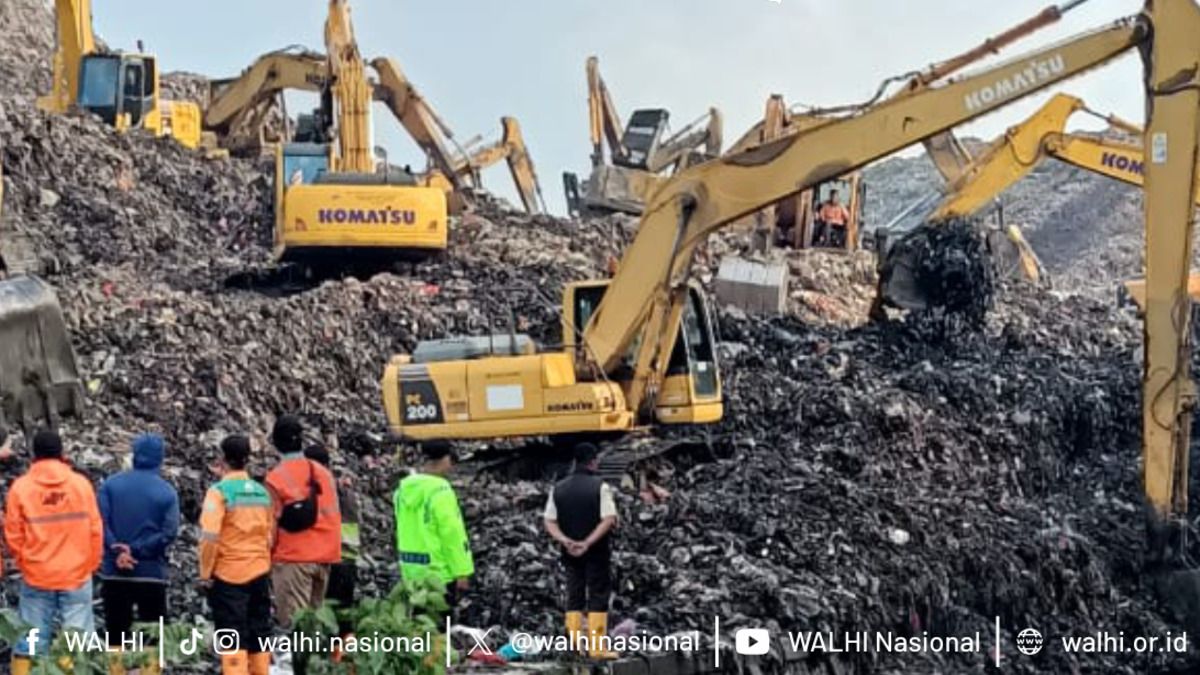
According to KKJ, a series of incidents over the past weeks following the devastating floods in Aceh, North Sumatra and West Sumatra reveal a clear and troubling pattern.
These include the intimidation of journalists covering international humanitarian assistance, the removal of disaster-related reports from online platforms, and the suspension or self-censorship of live broadcasts from affected areas by major television networks. KKJ said the restrictions escalated as field reporting increasingly exposed prolonged suffering among flood survivors and gaps in aid distribution, weeks after the disaster struck.
“These reports reflect the real conditions on the ground,” KKJ said, noting that such coverage often contradicts official statements suggesting that the situation is under control. The coalition warned that attempts to standardise narratives and obscure facts represent a serious effort to dominate public discourse at a time when transparency is critical for humanitarian response and public safety.
KKJ stressed that restricting disaster reporting constitutes a grave violation of citizens’ constitutional rights. Article 28F of Indonesia’s 1945 Constitution guarantees the right to seek, obtain, possess and disseminate information.
In the context of natural disasters, the coalition said, limiting access to accurate information not only breaches constitutional protections but also endangers lives by weakening early warnings, public awareness and accountability over state actions.
The press watchdog further warned that state intervention in news coverage risks turning the government itself into a producer of disinformation. Alleged instructions to halt or narrow disaster reporting, KKJ said, amount to manipulation of information by shutting down spaces for verification, criticism and public correction. When such spaces are closed, misleading or inaccurate statements by officials can remain unchallenged, undermining democratic principles and the rule of law.
The concerns raised by KKJ are reinforced by recent high-profile cases that have drawn widespread public attention.
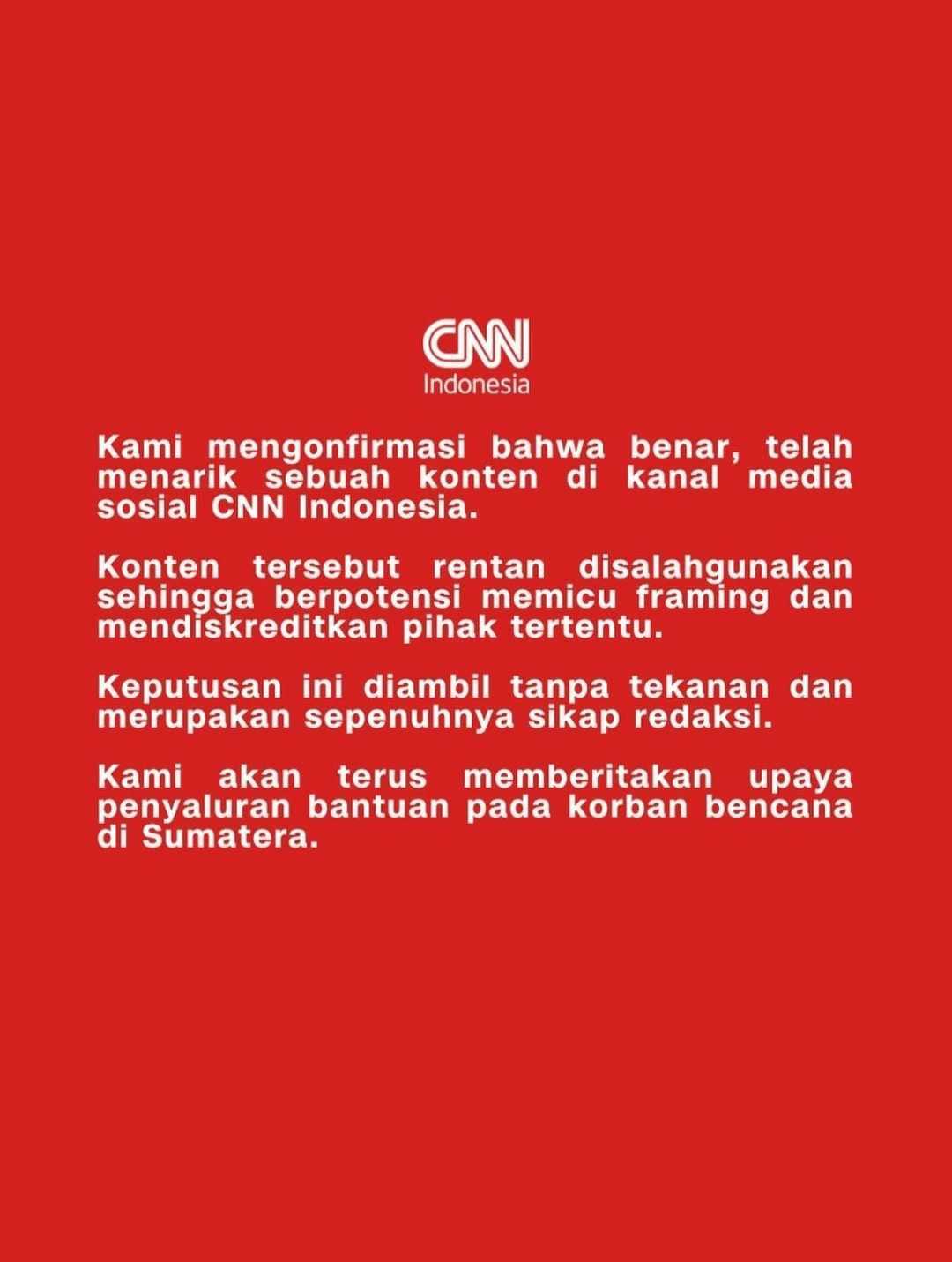
One involved CNN Indonesia, which removed a viral video showing an emotional live report from flood-hit Aceh Tamiang.
The footage, which depicted reporters breaking down while describing residents’ continued struggle to obtain aid weeks after the floods, was widely shared on social media and praised for its raw and humane portrayal of conditions on the ground.
CNN Indonesia said the video was removed for editorial reasons, citing concerns that it could be misused or taken out of context, but critics argue the move narrowed transparency at a time when sustained public scrutiny remains essential.
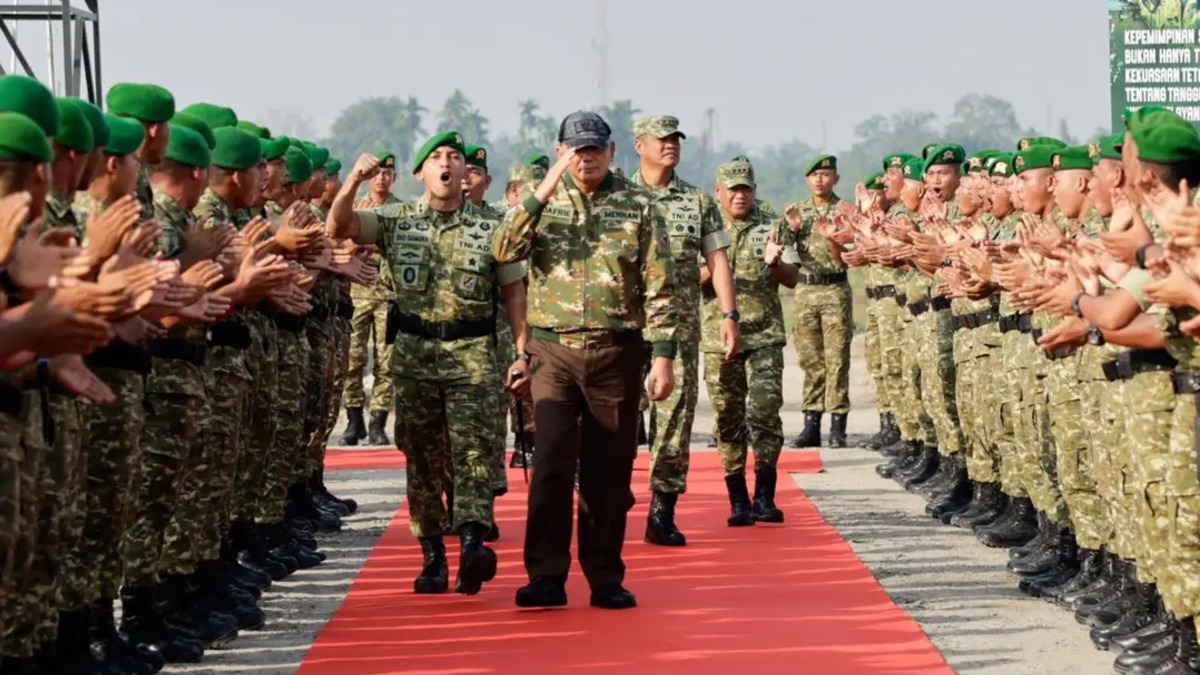
Another incident cited by journalist groups involved a Kompas TV journalist in Aceh whose recordings were allegedly deleted after he was confronted by members of the Indonesian National Armed Forces while preparing a live broadcast from a disaster command post.
According to accounts from press organisations, the journalist faced intimidation, the confiscation of equipment and the forced deletion of footage, despite explaining that his work was protected by law. The case has been described as emblematic of the heightened risks faced by reporters operating in disaster zones under heavy security presence.
KKJ also highlighted the broader legal context, pointing to Law No. 40 of 1999 on the Press, which explicitly guarantees press freedom and prohibits censorship, bans or broadcast suspensions. Article 8 of the law states that journalists are protected by law in carrying out their profession.
However, the coalition warned that restrictions on journalism do not always take the form of formal censorship. Instead, pressure often emerges through intimidation, editorial considerations influenced by political or security concerns, and institutional power dynamics that lead to self-censorship.
While criticising state actions, KKJ also placed responsibility on media companies. The coalition said media organisations cannot abdicate their role as instruments of social control and checks and balances on power. In the digital era, where content can be easily misinterpreted or taken out of context, editorial caution is necessary, KKJ acknowledged.
But excessive caution, it warned, risks normalising self-censorship and eroding the press’s role as a watchdog—particularly during humanitarian crises where the public interest is paramount.
Based on its findings, KKJ urged President Prabowo Subianto to publicly apologise to journalists who have experienced intimidation or restrictions while covering the Sumatra disaster and to immediately declare a national disaster status.
It also called on the president to guarantee full protection for journalists in disaster areas, order all state officials to stop issuing inaccurate or misleading statements, and ensure that the public receives accurate and factual information.
The coalition further urged the Press Council to take a more proactive role in pressing the state to fulfil its obligations to protect press freedom, particularly during emergencies.
Media companies, KKJ added, must guarantee the safety of journalists and refuse to participate in any form of censorship or narrative restriction related to the disaster.
Formed in 2019, KKJ is a coalition of 11 press and civil society organisations established to fight impunity in cases of violence against journalists. The group said the current controversy reflects long-standing vulnerabilities in Indonesian journalism, where silencing has often occurred not through overt bans but through subtler pressures tied to political power, security concerns and institutional authority.
As debate continues over press freedom and disaster reporting, KKJ warned that disasters do not end when coverage fades.
“When reporting that reflects the suffering of victims is removed from the public sphere,” the coalition said, “it is not only journalism that is weakened, but the voices of disaster survivors themselves that risk being silenced.”