UN warns Israel’s new law targeting UNRWA risks cutting basic services to millions
The United Nations has warned that new Israeli legislation stripping UNRWA of immunity and utilities could deprive millions of Palestinian refugees of education and healthcare, contradicting an ICJ order to facilitate the agency’s work.
- The United Nations has warned that Israeli legislation targeting UNRWA could deprive millions of Palestinian refugees of education and healthcare.
- Israel’s law strips UNRWA of diplomatic immunity, cuts access to utilities, and allows expropriation of its property, despite an ICJ order to facilitate its work.
- UN officials and former agency heads say the move threatens regional stability and lacks substantiated evidence for Israel’s allegations.
The United Nations warned on 30 December 2025 that recent Israeli actions against the UN agency for Palestinian refugees could deprive millions of people of essential services, including education and healthcare. The warning followed the passage of new legislation by Israel’s parliament.
The law formally strips the United Nations Relief and Works Agency for Palestine Refugees (UNRWA) of its diplomatic immunity.
It also bars Israeli companies from supplying water and electricity to the agency’s institutions, according to statements from UN officials in Geneva.
Israel has further authorised the expropriation of UNRWA offices in East Jerusalem.
According to UNRWA, this includes its headquarters and its main vocational training centre, both of which are central to the agency’s operations in the city.
ICJ order cited as legislation contradicts international law
UN officials said the move directly contradicts an order issued by the International Court of Justice in October 2025.
That order instructed Israel to “facilitate, not hinder” UNRWA’s work during ongoing genocide-related proceedings, according to court documents cited by the United Nations.
UNRWA leadership condemns move as systematic attack
UNRWA commissioner-general Philippe Lazzarini condemned the legislation as “outrageous”.
Writing on social media, he described it as part of a “systematic campaign to discredit UNRWA” and obstruct its role in providing human development assistance and services to Palestinian refugees.
Filippo Grandi, the outgoing head of the UN refugee agency UNHCR and a former UNRWA chief, also criticised the move. Speaking in an interview with AFP, he said the legislation was “very unfortunate” given the agency’s unique responsibilities.
Grandi noted that UNRWA differs from other UN agencies because it delivers basic public services directly.
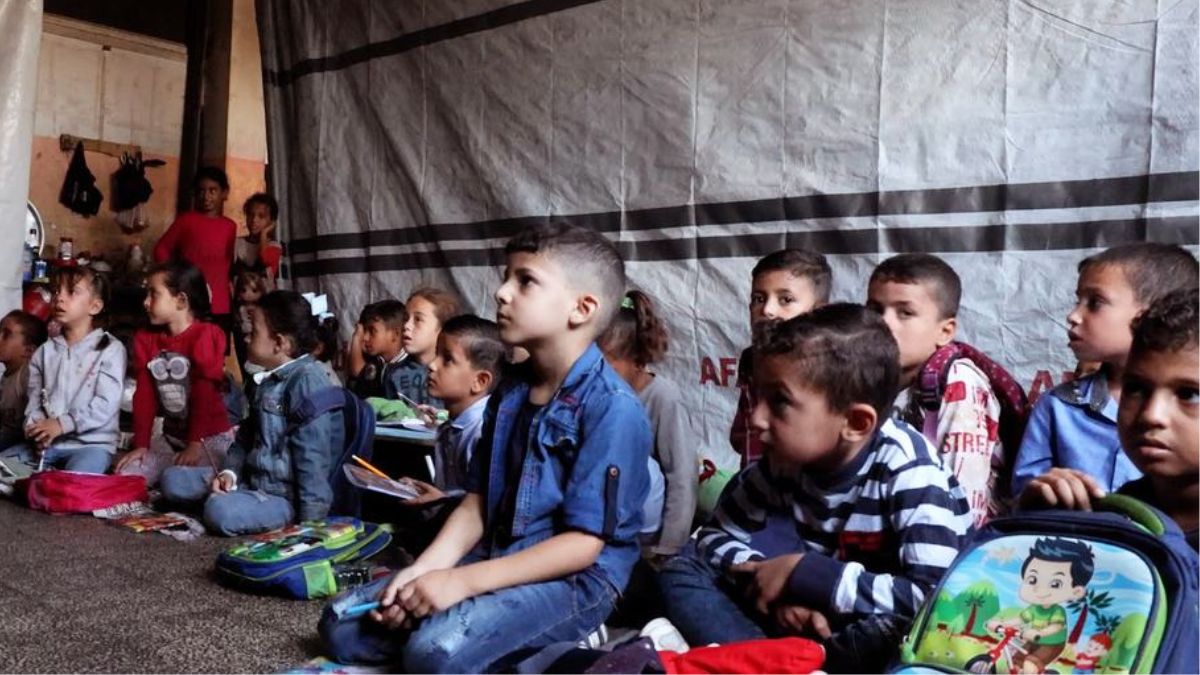
These include education and healthcare for millions of registered Palestinian refugees across Gaza and the West Bank, as well as in Lebanon, Jordan and Syria.
Risk of mass disruption to education and healthcare
“If you deprive those people of those services, then you had better find a substitute,” Grandi told AFP.
He warned that replacing UNRWA’s extensive infrastructure and expertise would be extremely difficult in the current political and security environment.
“At the moment, there is a great risk that millions of people will be deprived of basic services if UNRWA is further deprived of space to work, and resources to work,” he said.
Israel’s parliament passed the bill on Monday by a vote of 59–7, and it took effect immediately.
According to Israeli officials, the law allows authorities to seize UNRWA properties, block banking and payment services, and criminalise cooperation with the agency.
Israel reiterates allegations against UNRWA
Israeli Energy and Infrastructure Minister Eli Cohen defended the legislation. He alleged that UNRWA functioned as “an operational arm of Hamas”, a claim Israel has not substantiated with publicly available evidence.
Multiple investigations have examined Israel’s allegations. These include the independent Colonna review and a probe by the UN Office of Internal Oversight Services, which found no sufficient evidence to support the claim that UNRWA as an institution collaborated with militant groups.
A series of internal and external UN-linked investigations did identify some “neutrality-related issues” within the agency. However, they stressed that Israel had not provided conclusive proof for its most serious accusations, according to published findings.
Grandi criticised what he described as a torrent of accusations directed at the agency over the past two years. He said UNRWA remained indispensable to stability in the Middle East.
“Contrary to much of the frankly baseless rhetoric that we have heard in the past couple of years, UNRWA is a force for peace and stability,” he said. He added that weakening the agency would be “really irresponsible”.
Escalating pressure since start of Gaza war
Pressure on UNRWA has intensified since 2023, when Israel accused some agency employees of involvement in the 7 October attack by Hamas. That assault triggered the war in Gaza, now in its third year.
Earlier this month, Israeli authorities stormed UNRWA’s compound in East Jerusalem.
Officials removed the UN flag, replaced it with the Israeli flag, and previously forced the closure of UNRWA schools, disrupting education for hundreds of Palestinian children.
UNRWA clinics in East Jerusalem serve around 70,000 people. Many patients are among the city’s most economically vulnerable residents, according to the agency. Officials warn that cutting utilities and banking services could halt vaccinations and treatment for chronic illnesses.
Humanitarian crisis deepens amid Gaza death toll
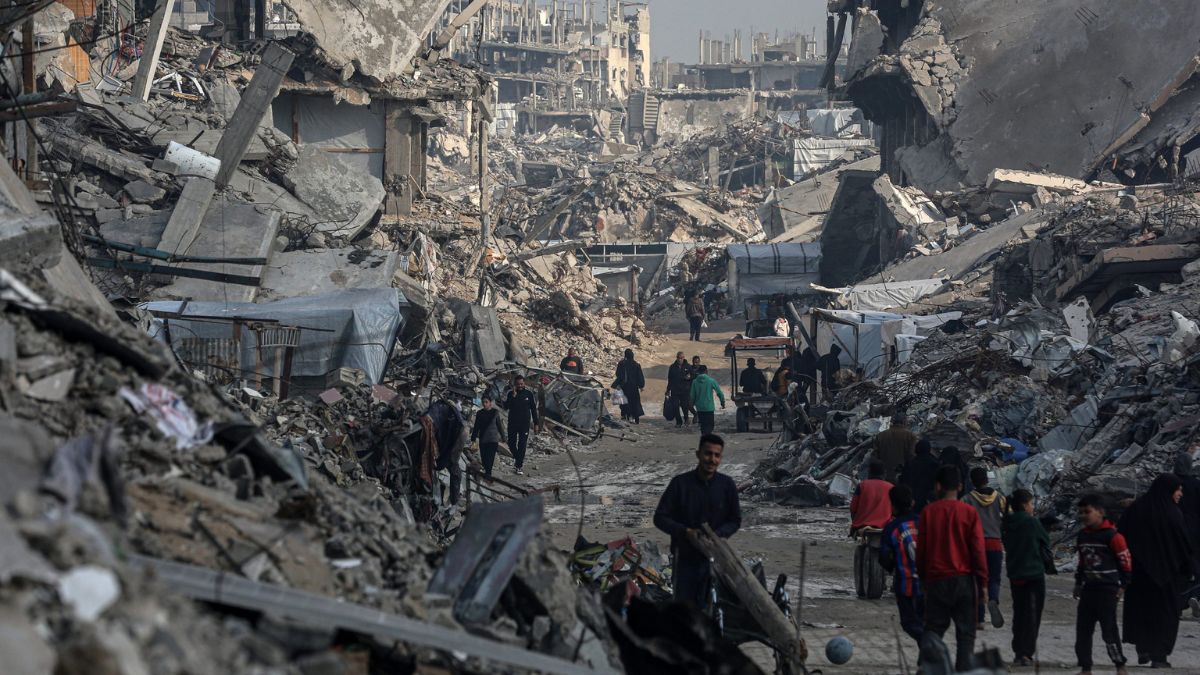
The legislation comes amid a devastating humanitarian toll in Gaza. More than 71,200 Palestinians have been killed since 2023, mostly women and children, according to local health authorities, alongside widespread accusations of starvation and obstruction of aid.
This is not the first law targeting UNRWA. In 2024, Israel banned the agency’s operations in East Jerusalem, suspended coordination with Israeli authorities, and stopped issuing visas for staff.
UNRWA’s mandate, most recently renewed by the UN General Assembly in December 2025, covers healthcare, education and humanitarian relief. The ICJ has described these services as indispensable to the rights of Palestinians.
“UNRWA is irreplaceable,” Lazzarini said. He added that Israel was obliged to act within the UN framework and described the legislation as a rejection of international law and multilateralism.