Mitsubishi’s offshore wind exit sparks concern, but policy reforms renew hope for Japan’s energy goals
Mitsubishi’s withdrawal from three wind projects has raised doubts over Japan’s energy strategy. However, IEEFA analysts argue that reforms and localisation can still secure a viable future for offshore wind.
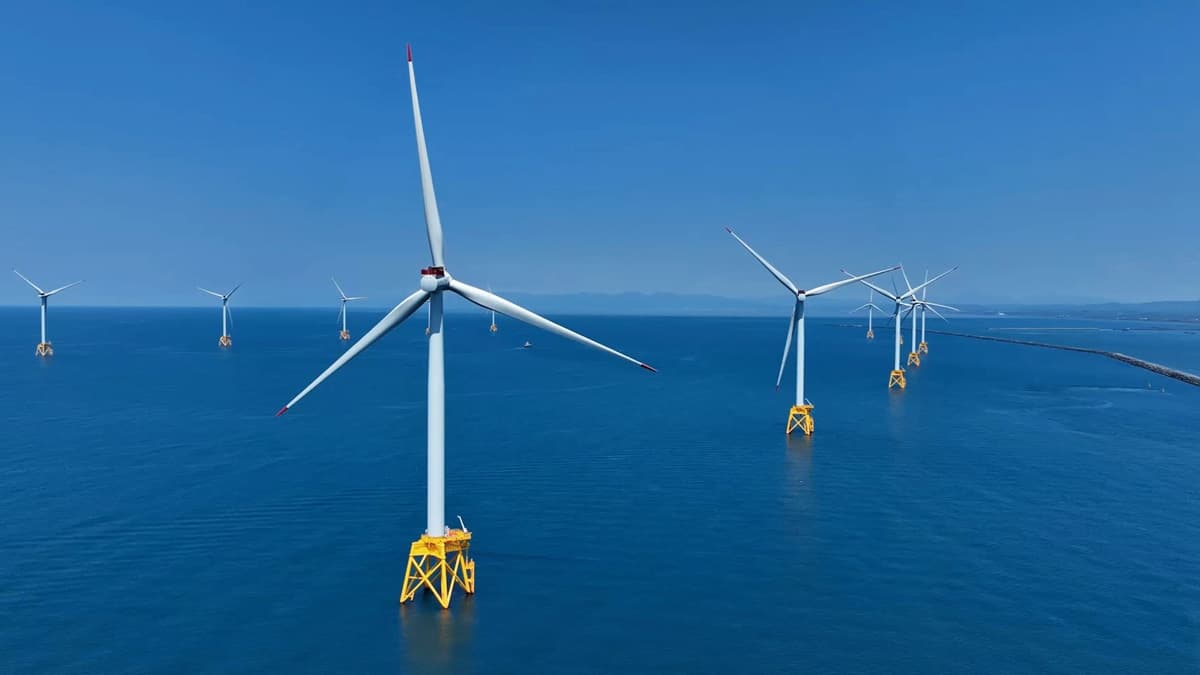
- Mitsubishi’s withdrawal highlights cost pressures and structural barriers in Japan’s offshore wind sector.
- The Japanese government has introduced key auction reforms to address low-price bidding and project delays.
- Domestic supply chain development and international collaboration signal a path forward despite challenges.
Japan’s ambitions for a thriving offshore wind sector came under renewed scrutiny in August 2025 when a consortium led by Mitsubishi Corporation withdrew from three major projects.
But according to a detailed analysis by Michiyo Miyamoto and Sam Reynolds of the Institute for Energy Economics and Financial Analysis (IEEFA), this withdrawal should be seen less as an industry collapse and more as a symptom of flawed policy design and cost burdens.
Their IEEFA briefing note, titled “Japan’s offshore wind sector: Down but not out,” argues that although Japan’s offshore wind developers face surging costs and systemic barriers, recent policy reforms and industrial strengths provide a foundation for future recovery.
IEEFA: Mitsubishi’s withdrawal exposes policy flaws more than market failure
Mitsubishi’s retreat came after the firm won all three projects in Japan’s first offshore wind auction in 2021. According to Miyamoto and Reynolds, the company’s low bids — between JPY11.99 and JPY16.49 per kWh — were risky from the outset, particularly given Japan’s higher project costs compared to more established European markets.
By 2025, investment costs had more than doubled, exceeding JPY1 trillion (US$6.4 billion). Mitsubishi reported a JPY52.2 billion (US$340 million) impairment, driven by inflation, yen depreciation, and supply chain disruptions. IEEFA notes that such outcomes reflect not just aggressive bidding but broader weaknesses in auction design and Japan’s reliance on imported equipment.
Structural cost pressures compounded by inflation and import dependence
Miyamoto and Reynolds highlight that construction costs for offshore wind in Japan rose 20% between FY2020 and FY2024, with turbines, cables, foundations, and substations all affected by global inflation. Wind turbines alone account for nearly 30% of capital expenditure in Japanese projects, and their costs rose 10%–15% between 2021 and 2023.
Japan’s heavy reliance on imported monopiles, turbines, and cables has left it exposed to volatile exchange rates. IEEFA’s authors point out that monopile transport from Europe can cost around JPY300 million (US$1.9 million) per unit. Steel prices surged globally during 2020–2022, raising the cost of components, even when Japan itself has a competitive steel sector.
Local supply chains underutilised due to irregular project pipeline
IEEFA’s report argues that Japan’s core challenge is not industrial capability, but the under-utilisation of domestic capacity. Japan has world-class firms in heavy fabrication, marine logistics, and electrical equipment. Yet an irregular auction schedule and long permitting timelines have prevented domestic suppliers from scaling operations.
Turbine manufacturing remains one of the few major gaps. While Toshiba plans a nacelle assembly line in partnership with General Electric, production has not yet started. Still, as Miyamoto and Reynolds note, up to 70% of offshore wind project costs are in components and services Japan can already produce — including towers, foundations, transmission systems, and vessels.
Auction reforms address speculative bidding and inflation risk
IEEFA credits recent government reforms with addressing many of the risks seen in the first auction round. Since January 2025, developers may now reflect up to 40% of cost inflation in pricing, and penalties for operational delays have doubled. From Round 4 onwards, bid evaluation will no longer focus solely on price, but also on project feasibility and local contributions.
In November 2025, seven further measures were announced, including access to 20 years of capacity revenue for zero-premium projects in Rounds 2 and 3. Developers are also allowed to revise key equipment choices in cases of supplier withdrawal. These moves are, according to Miyamoto and Reynolds, a significant step forward in ensuring project bankability.
Opening Japan’s EEZ could unlock new project areas
One of the most significant developments, Miyamoto and Reynolds observe, is Japan’s decision to open its exclusive economic zone (EEZ) to offshore wind installations. With the world’s sixth-largest EEZ, Japan can now tap into deeper, windier waters that support higher capacity factors. The IEEFA briefing notes that this move could fundamentally expand the country’s offshore wind potential.
Industry voices: Developers remain cautiously optimistic
Despite recent setbacks, some developers continue to pursue their projects. Masato Yamada, Senior Vice President at JERA Nex bp Japan Ltd, commented that offshore wind development has not yet truly begun in Japan. Referring to their Round 2 project off Akita, he noted that exiting would result in greater losses, making continued development the rational choice.
IEEFA’s authors also highlight that Mitsui & Co., Tohoku Electric, and JERA are advancing construction plans, targeting operations by 2028–2030. A cooperation agreement between Siemens Gamesa and METI, announced in June 2025, further signals efforts to localise turbine production and strengthen international collaboration.
Reforms offer momentum — but Round 4 brings new challenges
IEEFA warns, however, that while the government has improved conditions for Rounds 2 and 3, Round 4 projects will face tougher financial conditions. Relief measures — such as inflation adjustments and equipment flexibility — do not apply to Round 4 onward.
Several unresolved issues remain, including:
-
No protection for past inflation
-
Weak PPA market and lack of credit guarantees
-
High grid connection costs
-
No strategic offshore transmission plan
-
Shortages of ports and installation vessels
-
Regulatory delays and certification bottlenecks
Unless addressed, these barriers will continue to discourage domestic investment, lengthen timelines, and inflate costs.
Institutional reform key to unlocking sector potential
Mitsubishi’s withdrawal was a high-profile event, but IEEFA’s Miyamoto and Reynolds argue that the real issue lies in policy structure, not technology or demand. Their analysis concludes that by improving auction design, leveraging industrial capacity, and offering regulatory certainty, Japan can still deliver on its offshore wind targets.
The authors stress that Japan must treat offshore wind as both an energy and industrial strategy. With appropriate reforms, the sector could not only support climate goals but also reinvigorate key domestic industries.