LTA faces public backlash over shift to localised announcements for minor MRT delays
Netizens criticised LTA’s new policy to prioritise localised announcements for minor MRT delays, saying the move reduces transparency, hampers journey planning, and risks overcrowding, especially as recent disruptions and fare increases heighten public scrutiny.
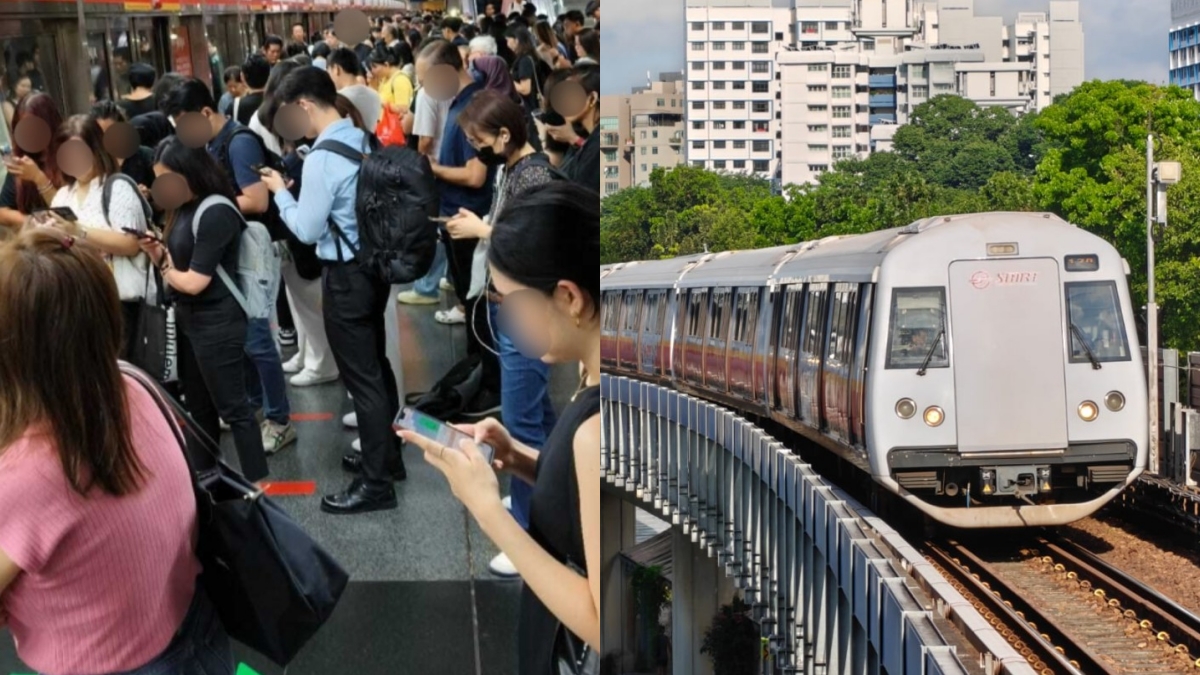
- Online comments sharply criticised the Land Transport Authority (LTA) for shifting to “localised communications” during minor MRT delays.
- Netizens argued the move reduces transparency, inconveniences commuters, and risks overcrowding.
- The policy change comes amid recent disruptions and an upcoming public transport fare increase.
SINGAPORE: Public criticism has intensified over the Land Transport Authority’s (LTA) recent decision to prioritise so-called localised communications for minor MRT delays.
Many online comments argued that the move reduces transparency and disadvantages commuters who rely on early warnings.
The backlash escalated after LTA announced on 3 December 2025 that minor delays of under 30 minutes would be communicated mainly to passengers at affected stations.
LTA: Rail operators to prioritise station-level communication for 'minor delays' under 30 minutes
According to LTA, this change aims to address feedback that earlier network-wide advisories did not reflect differing journey impacts.
The authority told The Straits Times that generic maximum travel-time estimates had prompted unnecessary detours among some commuters.
It added that the revised approach would allow more targeted information based on actual travel patterns.
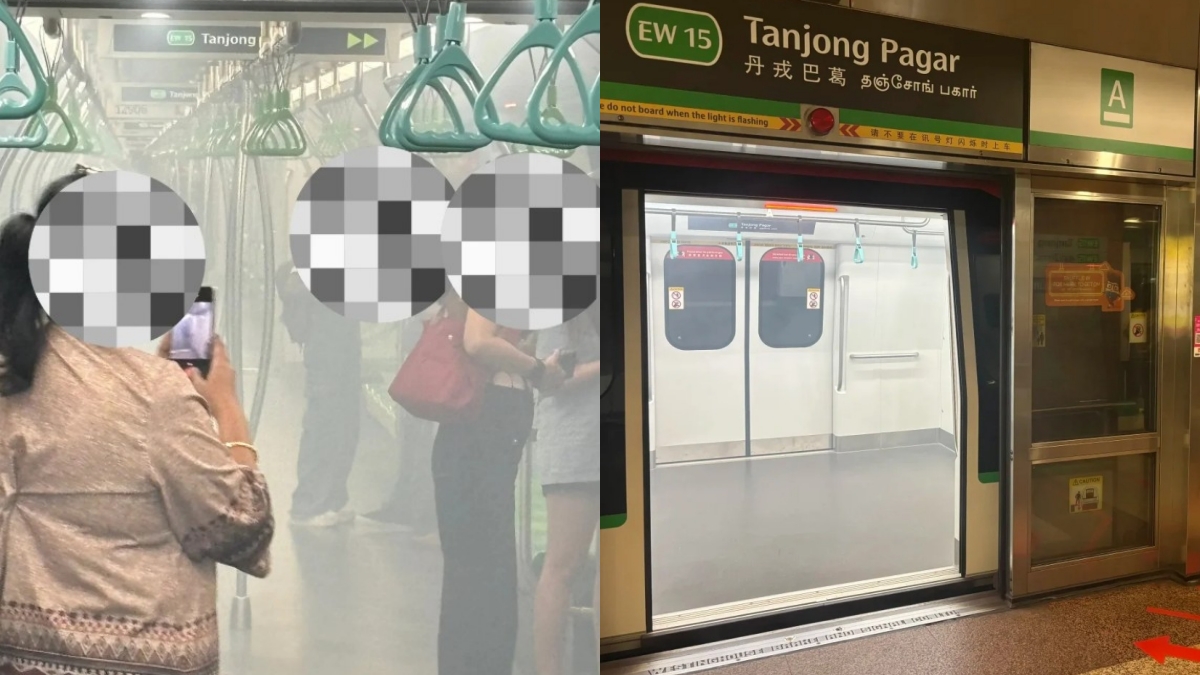
The announcement followed recent concerns about limited updates during service issues on the Thomson–East Coast Line on 18 November 2025 and the East–West Line on 2 December 2025.
These incidents highlighted what some saw as a gap between on-site announcements and online communications.
LTA stated that the shift aligns with recommendations from a rail reliability task force formed in September 2025.
The task force was convened after at least 15 disruptions between July and September 2025 and was mandated to strengthen system reliability and response protocols.
LTA also said it intends to develop tools for more accurate journey-time estimates based on commuter location and destination.
It claimed this would help reduce unnecessary diversions during faults.
Negative online reactions and commuter frustrations
However, reactions across CNA, The Straits Times and online outlet Mothership were largely negative.
Many commenters argued that withholding system-wide updates until commuters reach affected stations is illogical.
One commenter asked how difficult it would be to announce disruptions across all stations and trains, especially if SMRT maintains it provides world-class service.
Others argued that early warnings on social media allow commuters to switch lines, take buses or use point-to-point services.
They said the lack of timely updates does not justify the impending fare increase and suggested that transport officials may be out of touch with daily commuting realities.
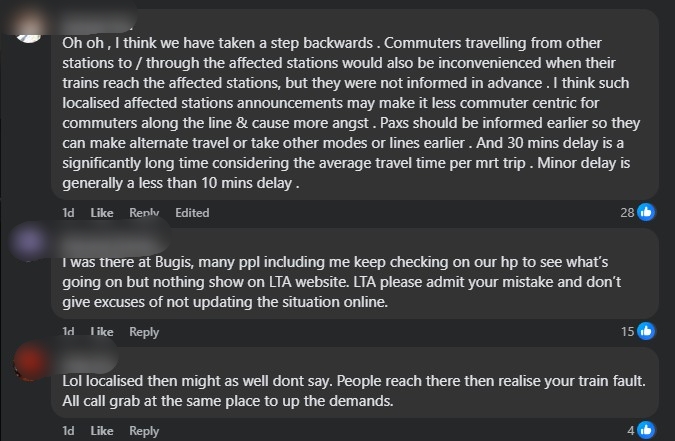
Some called the change a step backwards, noting that commuters travelling through affected stations would still be caught off guard without system-wide alerts.
They argued that a 30-minute delay is substantial given average travel times and that “minor” delays are usually interpreted as under 10 minutes.
Criticisms of transparency and commuter impact
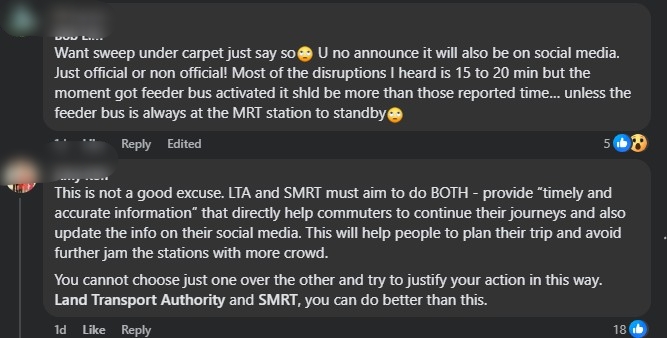
On social media, several insisted that all disruptions, whether minor or major, should be updated immediately across all channels.
A commenter highlighted that past advisories often underestimated actual delays and called for truthful, real-time communication, especially during peak periods.
Others criticised LTA and SMRT for offering what they described as a weak justification.
They said authorities should provide both accurate on-site information and timely online updates, arguing it was not an either-or choice.
Some viewed the shift as a reduction in accountability and transparency.


Open letter urging policy reversal
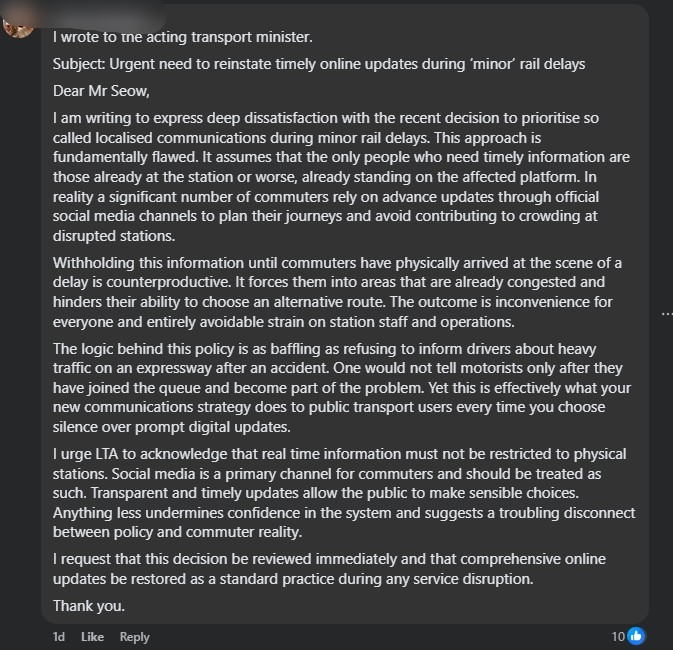
An open letter published by a commuter and addressed to Acting Minister Jeffrey Siow captured many of these frustrations.
According to the letter, withholding updates until passengers reach affected stations forces people into crowded spaces and removes their ability to choose alternate routes.
The commuter likened the approach to informing drivers about an accident only after they are stuck in traffic.
He wrote that digital channels such as social media are essential for real-time information and urged the acting minister to reverse the policy immediately.
Context of impending fare increases
A separate group of commenters mocked the policy with the acronym “Timely Accurate Information for Commuter Help Integration”, or “TAICHI”.

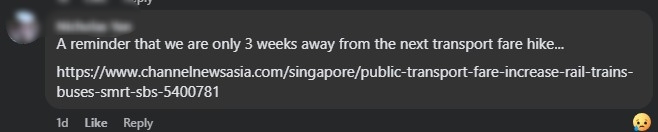
Some commenters contrasted the service issues with the fare hikes, arguing that higher charges must come with improved transparency and reliability.
The commuters prepare for a fare increase on 27 December 2025.
Under the adjustment, adult card fares for buses and trains will rise by 9 to 10 cents as part of a 5% fare revision.

Communication standards and regulatory expectations
The rail reliability task force’s mandate includes reviewing how service recovery information is delivered.
In Parliament on 22 September 2025, Acting Minister Siow highlighted the need for passengers to access alternative route information and travel-time estimates from a centralised source.
He suggested that such information could be consolidated into a single application for ease of use during disruptions.
Existing standards require operators to inform commuters of delays exceeding 10 minutes through station announcements and mainstream and social media channels.
These requirements have been in place since 30 November 2017.
Louis Chua, a Member of Parliament for Sengkang GRC from the Workers’ Party, asked in Parliament whether any operator had failed to comply with these requirements.
Acting Minister Siow said operators had met the communication standards over the past five years, adding that no penalties had been necessary.
He noted, however, that these standards formed only a basic requirement and improvements would be pursued.
Rail reliability and recent history
Singapore’s rail system has faced multiple disruptions in recent months.
Between July and September 2025 alone, at least 15 delays or interruptions were recorded across the MRT and LRT networks.
In response, the LTA established a Rail Reliability Taskforce in October 2025, which includes a five-member Independent Advisory Panel chaired by LTA chief executive Ng Lang.
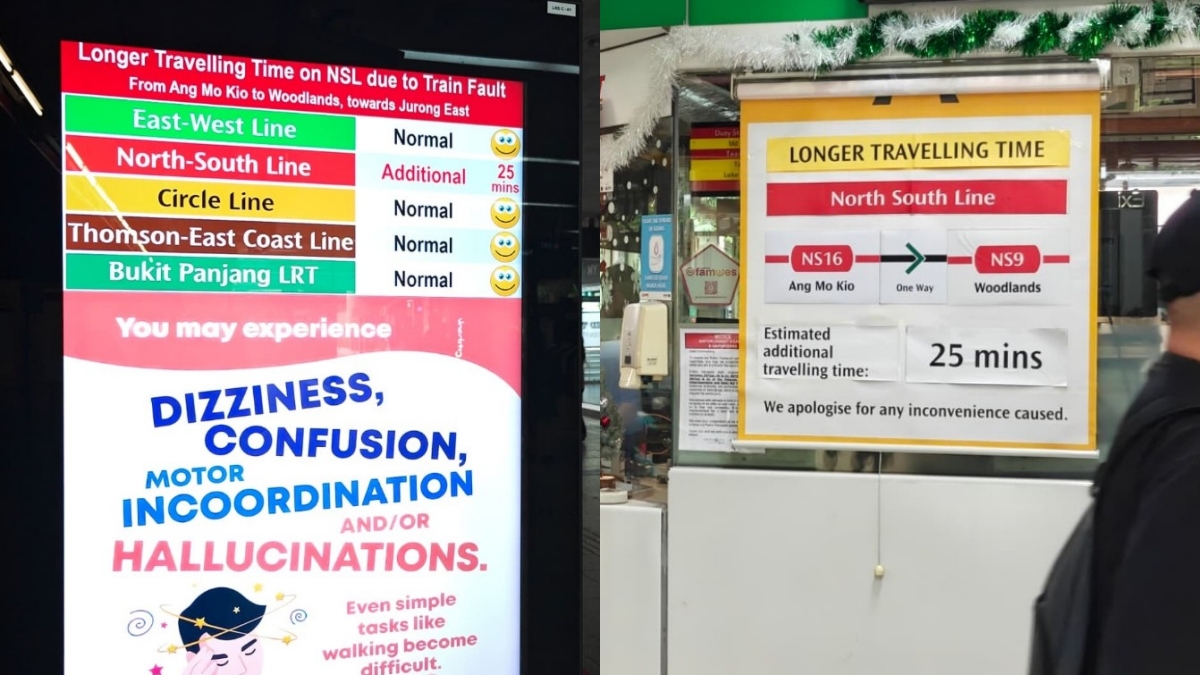
On 11 November, commuters reported delays of up to 25 minutes on the East–West Line between Tanah Merah and Pasir Ris due to a track point fault, with no corresponding updates from SMRT on its social media channels.
According to LTA’s latest rail reliability figures released on 14 November, the MRT network recorded a second consecutive month of declining reliability.
From October 2024 to September 2025, trains averaged 1.67 million train-kilometres between delays of more than five minutes.