Indonesia’s new criminal laws raise fears of shrinking civil liberties in 2026
Indonesia’s largest legal-aid network has warned that new criminal laws taking effect in January 2026 could sharply restrict freedom of expression, expanding state powers to criminalise dissent and encouraging fear and self-censorship.
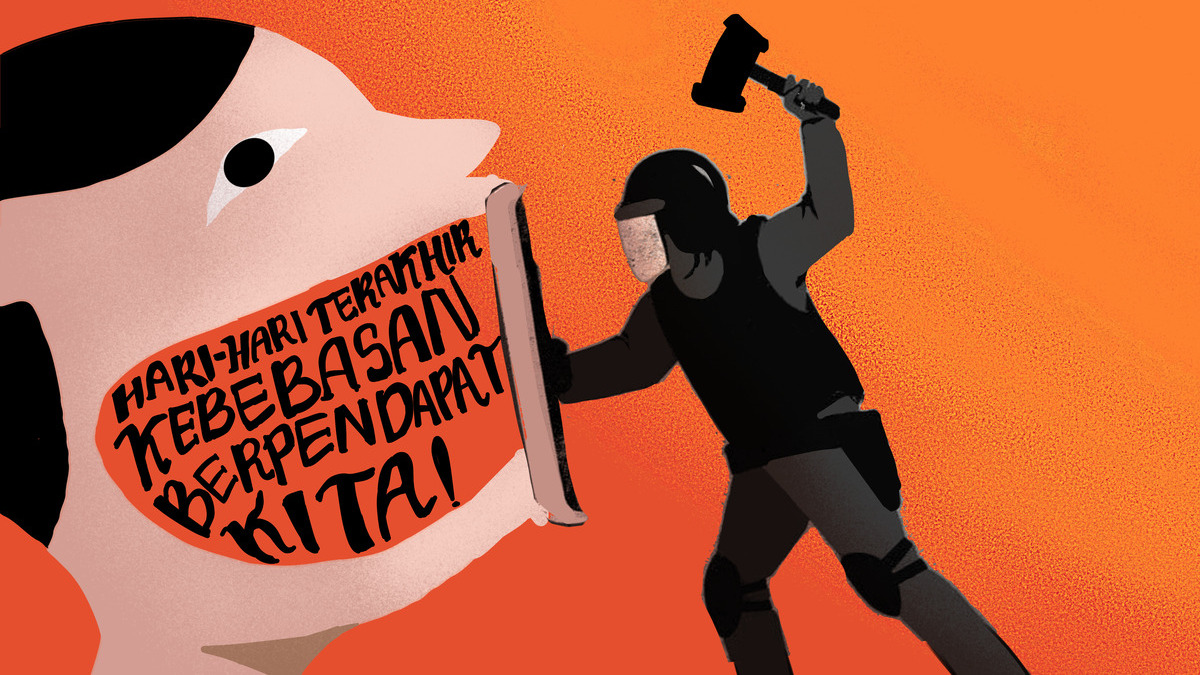
- Indonesia’s largest legal-aid network warns that new criminal laws taking effect in January 2026 could sharply restrict freedom of expression.
- The New Criminal Code and revised Criminal Procedure Code are seen as expanding state powers to criminalise dissent and criticism.
- Legal groups and human-rights bodies say the laws risk encouraging fear and self-censorship even without widespread enforcement.
Indonesia’s transition into 2026 could coincide with a sharp contraction of civil liberties, according to Indonesia’s largest legal-aid network, Indonesian Legal Aid Foundation (YLBHI).
In a press release issued on 31 December 2025, YLBHI warned that the coming into force of the country’s new Criminal Code and Criminal Procedure Code may fundamentally alter the balance between state power and citizens’ rights, particularly freedom of expression.
“1 January 2026 could mark the last day of our freedom of expression,” YLBHI said, arguing that criticism of government performance, parliament, the judiciary, or environmentally harmful policies could increasingly expose citizens to criminal prosecution.
Two laws, one legal framework
The warning comes ahead of the implementation of Law No. 1 of 2023 on the Criminal Code, known as the New Criminal Code (KUHP Baru), which will take effect on 2 January 2026, three years after its promulgation.
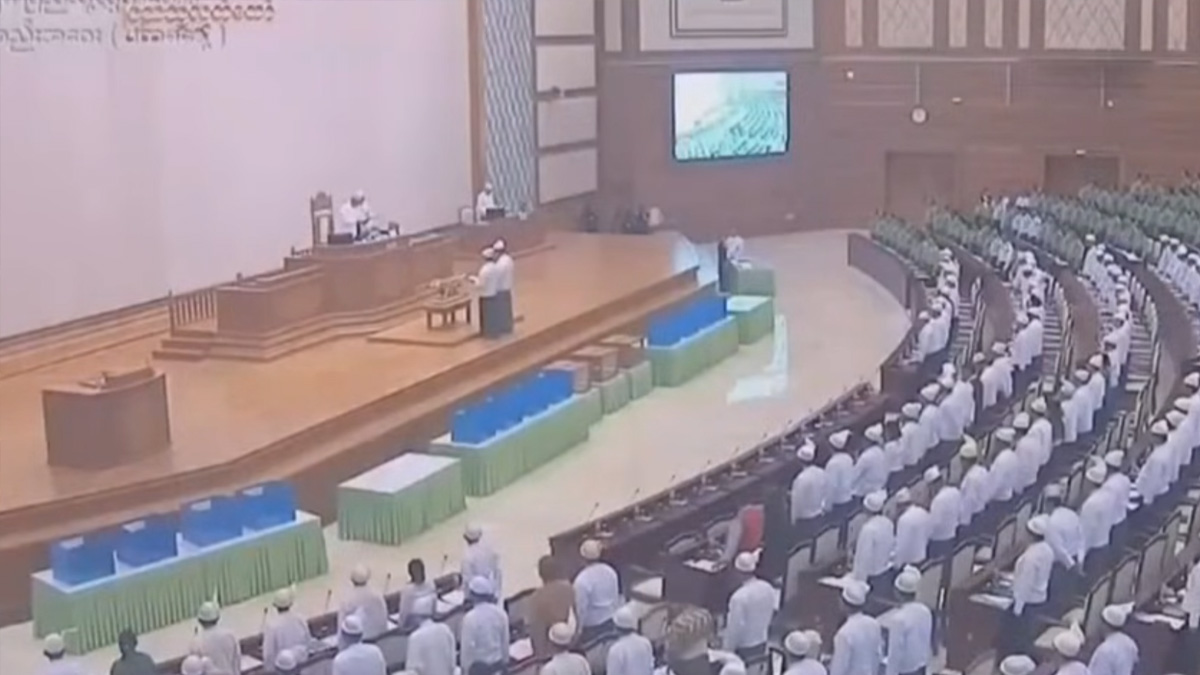
In November 2025, Indonesia’s parliament, the Dewan Perwakilan Rakyat Republik Indonesia (DPR RI), also approved the revised Criminal Procedure Code (KUHAP Baru), which is scheduled to take effect on the same date.
While the Criminal Code defines offences and penalties, the Criminal Procedure Code governs how those offences are investigated and prosecuted.
YLBHI said the two laws should be understood as a single package that will shape everyday law enforcement. Taken together, it argued, they significantly expand the state’s capacity to criminalise dissent.
From dissent to prosecution
YLBHI pointed to a growing pattern of criminal cases against individuals whose opinions—often expressed on social media—were deemed to disturb public order.
Activists such as Delpedro and Laras, among hundreds of others, have faced prosecution under broadly interpreted provisions on “incitement”.
The organisation also highlighted cases in which unrelated legislation has been used to suppress political activity.
Article 76H of the Child Protection Law, originally designed to prevent the exploitation of children, has been applied to individuals accused of providing political education to minors.
According to YLBHI, such cases illustrate how vague or poorly drafted criminal provisions can be repurposed to silence critical voices.
Criminalising “insults” to the state
Central to YLBHI’s concern are provisions in the New Criminal Code on insulting the government or state institutions.
Articles 240 and 241 impose prison sentences of up to four years for verbal or written insults, including those conveyed through digital media, if they are deemed to cause public disorder.
Although these offences are classified as complaint-based—requiring a written complaint from the leadership of the relevant institution—YLBHI questioned whether this safeguard offers meaningful protection.
The organisation cited previous instances in which senior officials pursued legal action against critical reporting or commentary.
YLBHI also challenged the legal logic underpinning the provisions. Under international human-rights standards, it argued, insult offences are intended to protect individuals, not institutions.
In a democratic system, criticism of state institutions is inseparable from scrutiny of their performance.
If the provisions are instead interpreted as protecting individual office-holders, YLBHI said, they risk granting special legal privileges to state officials, contradicting the constitutional principle of equality before the law.
Procedural powers and detention
YLBHI said the risks posed by the New Criminal Code are reinforced by the revised Criminal Procedure Code.
Article 100 of the new KUHAP allows detention not only for offences punishable by five years’ imprisonment or more, but also explicitly for offences under Articles 240 and 241 if public disorder is alleged.
The revised procedure code also expands investigators’ powers to search electronic data and block online accounts without prior court approval in situations based on their own assessment.
YLBHI warned that these provisions grant law-enforcement authorities wide discretion to access personal data, conduct surveillance, and restrict online expression with limited judicial oversight.
Fear and self-censorship
According to YLBHI, the impact of these laws may extend beyond their actual enforcement. Citing academic research on online repression in Southeast Asia, the organisation said governments often rely on selective prosecutions to create a broader climate of fear. High-profile cases can deter others from speaking out, leading to widespread self-censorship.
In this context, YLBHI said, citizens may refrain from criticising disaster response failures, corruption in public institutions, or controversial policy decisions—not because such criticism is unlawful in principle, but because the legal consequences are unpredictable and potentially severe.
Legislative process under scrutiny
The legal substance of the reforms has been compounded by criticism of the legislative process itself.
The revised Criminal Procedure Code was approved after what critics described as an accelerated and opaque deliberation, involving hundreds of unresolved issues.
YLBHI described the process as an “emergency warning” and called on the government to withdraw the bill and restart deliberations. The organisation also released a widely shared social-media video warning that the revised law would give police “super power” and allow “everyone” to become a suspect.
The message resonated with students, lawyers, and human-rights advocates, triggering protests outside parliament.
Human-rights concerns
Indonesia’s National Human Rights Commission, Komisi Nasional Hak Asasi Manusia (Komnas HAM), has raised constitutional concerns over the revised procedure code, particularly regarding surveillance powers, weak judicial checks, and the risk of arbitrary detention.
For YLBHI, the broader issue is whether Indonesia’s legal system will function as a restraint on power or as a mechanism for political control. Drawing on legal theory, the organisation warned that law can shift from protecting citizens to disciplining them, especially when legal authority and political power become closely intertwined.
A defining moment
As Indonesia enters 2026, YLBHI said the combined effect of the New Criminal Code and the New Criminal Procedure Code represents a decisive moment for the country’s democracy.
Even if the laws are not aggressively enforced, their existence alone may reshape public behaviour.
“The danger,” YLBHI concluded, “lies not only in prosecution, but in fear.”