WALHI urges JBIC to halt funding for Aceh green ammonia project over safety, transparency concerns
Indonesia’s largest environmental organisation has urged Japan’s state-owned development bank to withdraw from a planned green ammonia project in Aceh, citing safety risks, fossil fuel dependence and lack of public consultation.
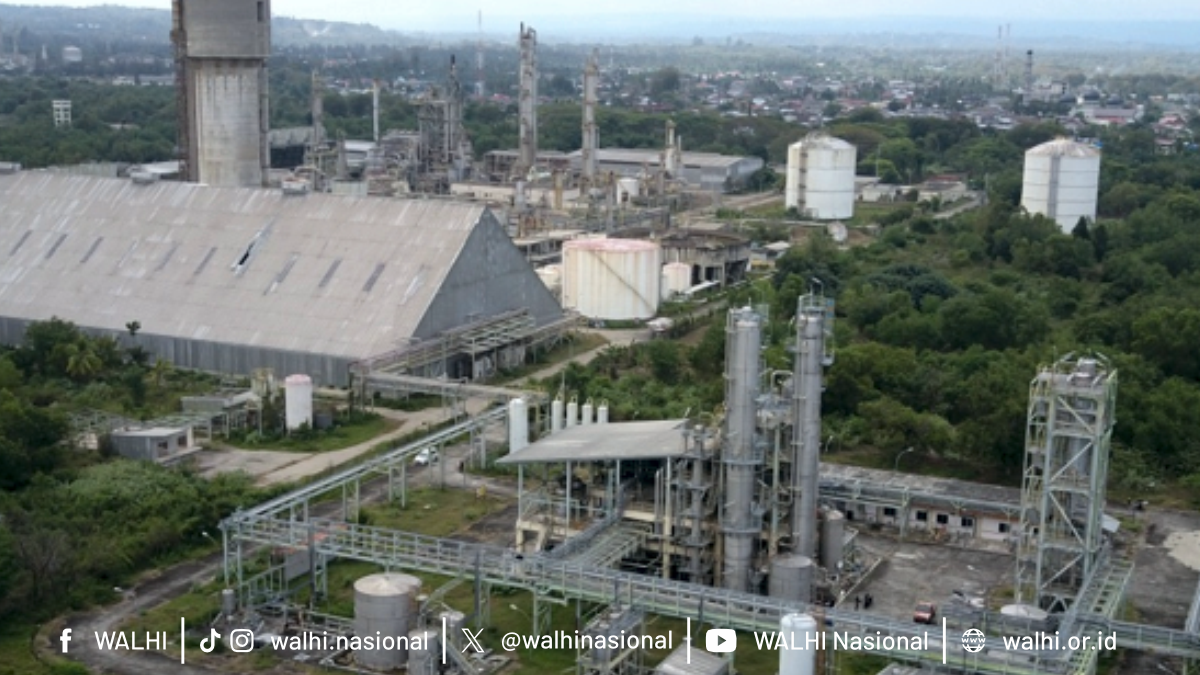
- WALHI has called on JBIC to withdraw financing from the Green Ammonia Initiative from Aceh (GAIA).
- The group warns the project risks community safety, fossil fuel lock-in and greenwashing.
- WALHI says affected communities were not meaningfully consulted and past ammonia leaks were downplayed.
Indonesia’s largest environmental organisation, Wahana Lingkungan Hidup Indonesia (WALHI), has formally urged the Japan Bank for International Cooperation (JBIC) to withdraw from plans to finance the Green Ammonia Initiative from Aceh (GAIA), warning that the project risks reinforcing fossil fuel dependence, endangering local communities and violating basic principles of transparency and public participation.
In a letter of protest addressed to JBIC Governor Nobumitsu Hayashi, WALHI criticised the bank’s decision to classify the GAIA project as Category C under its environmental and social guidelines — a designation that assumes minimal impact.
The project is being developed by PT Pupuk Indonesia through its subsidiary PT Pupuk Iskandar Muda, in partnership with ITOCHU Corporation and Toyo Engineering. WALHI argued that the classification fails to reflect longstanding safety, environmental and social risks surrounding the existing ammonia facilities in North Aceh.
According to WALHI, between 2010 and 2025 there were nine ammonia leak incidents at PT Pupuk Iskandar Muda that affected around 2,000 residents, causing symptoms ranging from respiratory distress and nausea to loss of consciousness, with some victims requiring intensive hospital care.
An impact assessment compiled by WALHI Aceh found that emergency warning systems were ineffective, evacuation procedures poorly communicated, and responses often depended on residents’ own initiative.
Vulnerable groups — including children, the elderly and pregnant women — were found to face heightened health risks in the absence of adequate protection.
WALHI also raised concerns about JBIC’s assertion that its financing would be limited to hydrogen production via electrolysers and would not cover ammonia manufacturing.
The group argued that hydrogen produced under JBIC-backed facilities would still feed directly into the ammonia production chain, making the bank indirectly responsible for the project’s broader social and environmental impacts.
“Administrative separation does not remove accountability when impacts are experienced by communities on the ground,” WALHI said.
Beyond safety issues, the organisation highlighted economic harm to coastal communities. Small-scale fishermen in North Aceh have reportedly lost access to traditional fishing areas following industrial expansion, while alleged marine pollution from industrial wastewater has reduced fish catches.
The loss of fish aggregating devices has increased operating costs, WALHI said, while compensation has failed to reflect actual losses. At the same time, economic benefits from the industrial zone have been uneven, with many residents excluded from formal employment and left increasingly dependent on corporate assistance.
WALHI further challenged the project’s “green” credentials, noting that the electricity used for hydrogen electrolysis would be drawn from Aceh’s PLN grid, which it said remains about 98 per cent fossil fuel-based. As a result, the ammonia produced would be “hybrid” rather than genuinely green. The use of Renewable Energy Certificates (RECs), the group added, amounts to an administrative mechanism that masks continued reliance on fossil fuels rather than guaranteeing new renewable energy supply.
Concerns were also raised over the absence of meaningful consultation. WALHI said communities living closest to the factory site — including villages in Dewantara district — had never received an official explanation of the GAIA project, despite being most exposed to potential risks.
Local authorities were similarly left in the dark, with WALHI Aceh reporting that the Regional Development Planning Agency of North Aceh only learned of the plans through media reports and had not received sufficient information from the project proponents.
Alongside the protest letter, WALHI also submitted a formal petition calling for the immediate termination of the GAIA project. In the petition, signed by WALHI’s national executive and its Aceh chapter, the organisation demanded that PT Pupuk Indonesia, ITOCHU Corporation and Toyo Engineering halt the project, arguing that it constitutes greenwashing rather than a genuine energy transition.
The petition states that GAIA prolongs Indonesia’s dependence on fossil fuels, threatens community safety, damages coastal livelihoods and violates the rights of affected communities to information and participation as guaranteed under Indonesian law and international environmental principles.
WALHI concluded that both the letter and the petition reflect a broader call for ecological justice, warning that without transparency, community consent and robust safety safeguards, the GAIA project risks deepening inequality and environmental harm rather than supporting a just transition away from fossil fuels.