Amnesty warns Indonesian soldiers at corruption trial threaten judicial independence in Jakarta courtrooms
Amnesty International Indonesia has criticised the presence of Indonesian National Armed Forces personnel at a Jakarta corruption trial, warning it undermines judicial independence and reflects a troubling return of militaristic practices in civilian legal processes.
- Amnesty International Indonesia criticised the presence of soldiers at a Jakarta corruption trial.
- The group warned the move undermined judicial independence and civilian supremacy.
- Authorities cited security needs and an inter-agency agreement, which Amnesty rejected.
Amnesty International Indonesia has strongly criticised the presence of Indonesian National Armed Forces personnel at a corruption trial in Jakarta, warning that the involvement of soldiers in civilian courtrooms undermines judicial independence and revives militaristic practices incompatible with democratic governance.
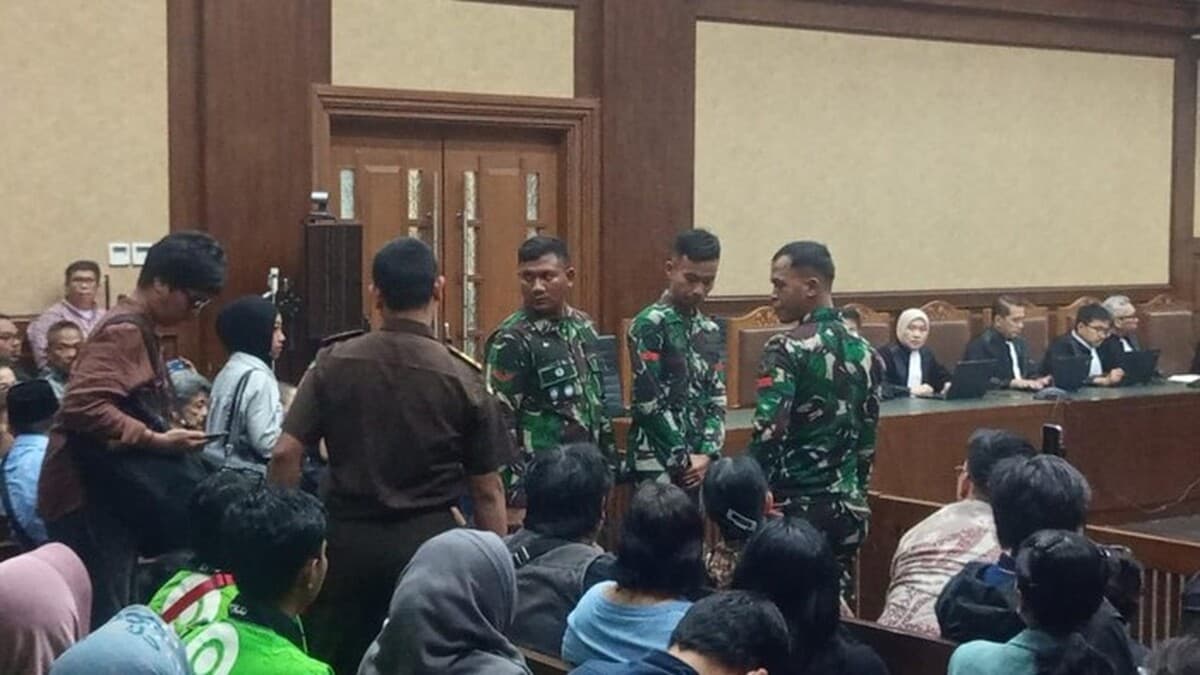
The statement followed the appearance of three uniformed members of the Indonesian National Armed Forces (TNI) at a hearing at the Jakarta Corruption Court involving former education minister Nadiem Makarim on Monday, 5 January 2026.
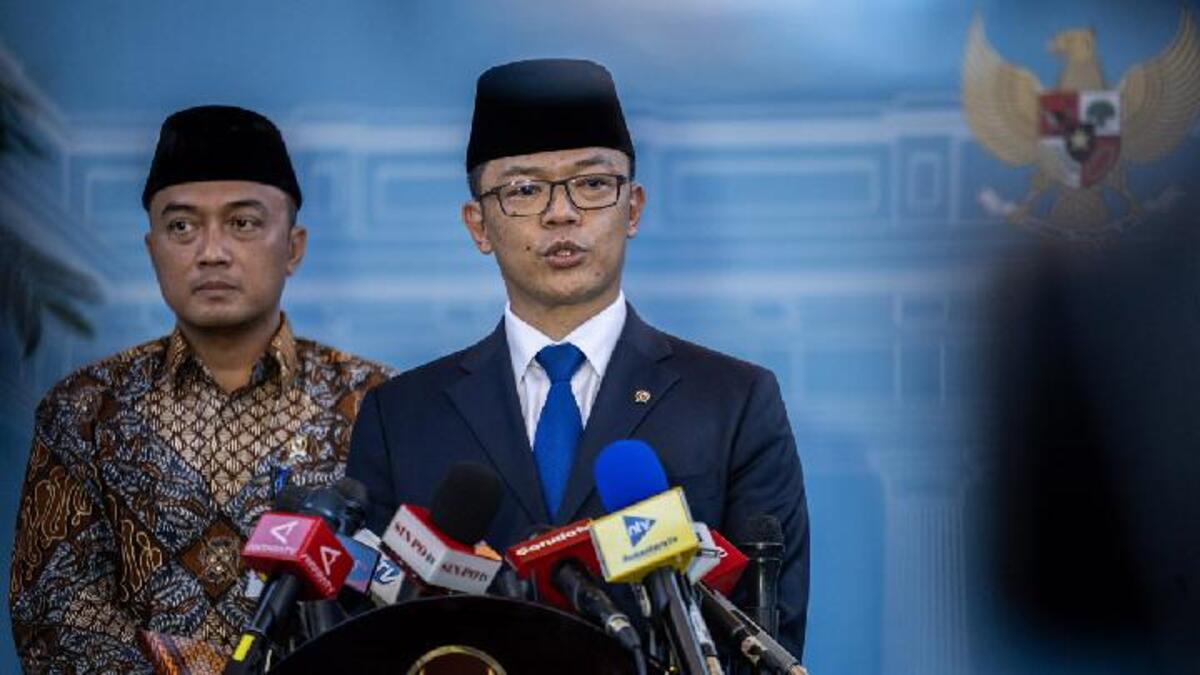
Responding to the incident, Usman Hamid, Executive Director of Amnesty International Indonesia, said the deployment of soldiers in a courtroom fundamentally contradicted the constitutional role of the military.
“The TNI is an instrument of the state tasked with implementing national policy in the defence sector, not a security unit in a courtroom,” Hamid said.
“The TNI is not the prosecutors’ bodyguards. General courts are part of an independent judiciary and must be free from military influence.”
Atmosphere of intimidation
Hamid stressed that a fair trial depends on proceedings being conducted without pressure or intimidation.
According to Amnesty International, the presence of soldiers in combat uniforms risks creating fear among judges, witnesses, defendants and defence lawyers.
“A trial free from pressure is a prerequisite for justice,” he said. “The presence of military personnel in combat attire creates an atmosphere of intimidation for everyone involved in the hearing.”
He added that the soldiers’ presence breached both procedural rules and the principle of civilian supremacy over the military.
Hamid said the presiding judge was right to order the soldiers to step back after their presence obstructed the view of court visitors and journalists.
“This was not only disruptive, but unlawful,” he said, urging the Prosecutor’s Office to immediately end what he described as “militaristic security practices” in civilian courts.
MoU does not bind the courts
Authorities justified the presence of the soldiers by referring to a Memorandum of Understanding (MoU) between the TNI and the Attorney General’s Office.
Amnesty International rejected that argument, saying such an agreement cannot override constitutional principles or bind the judiciary.
“The justification of ‘security’ based on an MoU between institutions does not apply to the courts,” Hamid said. “The Prosecutor’s Office must understand the constitutional limits of the TNI’s role.”
He further suggested that the decision not to request security assistance from the National Police reflected political sensitivities surrounding the case, as well as a long-standing institutional rivalry between prosecutors and the police.
Contradiction with presidential pledge
Amnesty International also linked the incident to broader concerns about the expanding role of the military in civilian governance. Hamid said the scene inside the Corruption Court directly contradicted the President’s repeated assurances that Indonesia would not return to militaristic practices.
“The reality in the courtroom, and the growing involvement of the military within civilian bureaucracy, shows how militarism is being normalised,” he said.
To safeguard the rule of law, Amnesty International called for an end to the militarisation of courtrooms. “The TNI should confine its role strictly to military courts,” Hamid said. “Soldiers must return to their constitutional functions in order to uphold civilian supremacy.”
Background to the incident
The controversy arose during the opening of Nadiem Makarim’s corruption trial at the Central Jakarta District Court.
Three TNI personnel were seen standing inside the courtroom, drawing attention from visitors and members of the press.
Presiding Judge Purwanto S. Abdullah reprimanded the soldiers for obstructing visibility in the courtroom and ordered them to step back. The soldiers subsequently left the room.
Chief prosecutor Roy Riady said the soldiers had been present solely for security reasons.
Meanwhile, TNI Information Chief Aulia Dwi Nasrullah confirmed that the deployment followed a request from the Prosecutor’s Office and was conducted under the existing MoU between the two institutions.
High-profile corruption case
On the same day, prosecutors formally opened the corruption trial against Nadiem, accusing him of orchestrating a flawed education digitalisation programme that allegedly caused state losses of Rp 2.1 trillion (approximately US$125 million).
Prosecutors allege that between 2019 and 2022, the Ministry of Education, Culture, Research and Technology manipulated the procurement of Chromebook laptops and Chrome Device Management systems, resulting in inflated prices, unnecessary purchases and the enrichment of officials and private companies.
According to the indictment, Nadiem allegedly received Rp 809.59 billion, while a total of 25 parties—12 ministry officials and 13 private-sector actors—benefited from the scheme. State losses were calculated by Indonesia’s Financial and Development Supervisory Agency (BPKP) in an audit completed in November 2025.
The case is being tried under Indonesia’s new Criminal Procedure Code, which came into force on 2 January 2026, while the substance of the charges relies on the Anti-Corruption Law.
For Amnesty International, however, the legal substance of the case does not justify the military’s presence in court. “No matter how high-profile the defendant,” Hamid said, “justice must be administered in a civilian space, free from military pressure.”